


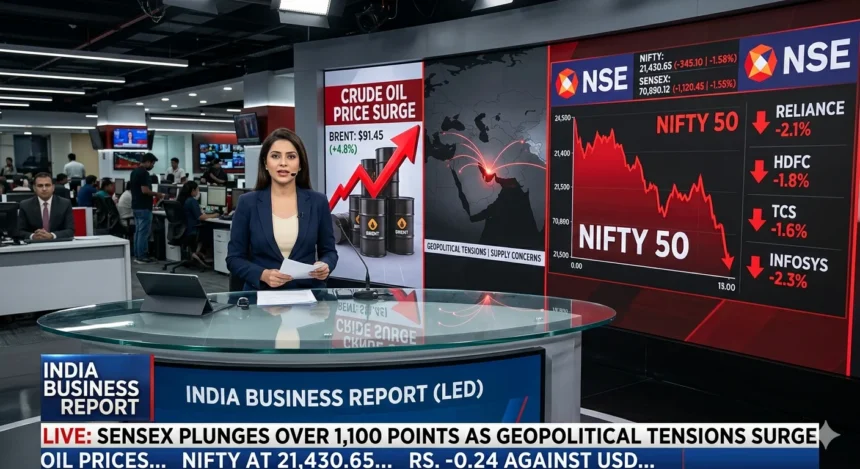
The Indian stock markets had fallen sharply on Thursday, with the Sensex down by more than 700-800 points and Nifty down by 170+ points by early afternoon. At 1 pm, Nifty was trading at 24,200, having fallen by 0.7% while Sensex traded near 78,700 points, down by almost 0.9%. The midcap and smallcap markets were also under pressure as they traded lower. The banking shares continued to face selling pressure.
The main reason behind such selling in the market has been increasing geopolitical risks in the Middle Eastern region, primarily between Iran and the US. Reports of continued disruptions at the Strait of Hormuz—the important oil transportation route in the world-have been creating fears regarding shortage of supplies. Prices of Brent crude rose to near 106 dollars per barrel mark, while WTI crude climbed to near 97 dollars per barrel. Such closures or disruption at the Strait of Hormuz has always created an impact on the rise of oil prices.

One other significant reason affecting the markets is constant selling by FIIs. According to information available from the derivatives market, FIIs have been maintaining a net short position in index futures, implying their cautiousness. In addition, high crude prices will make the country’s imports costly, negatively affect its currency, and create fears of inflation, thereby discouraging investments. The markets in Asia were also lower, with the indices in countries like Japan, Hong Kong, and Australia down by up to 1 percent.
In the case of Indian investors, it has become clear that the prevailing trends in the markets have made the Indian economy vulnerable to outside influences, especially commodity prices and geopolitics. It is well known that banks, along with other interest rate sensitive sectors, are quite susceptible to external factors due to fears of inflation and interest rates.
As a result, traders should focus on oil prices, the Middle East situation, and FII activities for future trends. The weekly settlement of derivatives markets could bring about volatility, although stabilization in oil prices would offer a reprieve. It is advisable for investors to watch out for comments by central banks globally as well as forex markets. Markets could continue to be volatile until there is some clarity on the geopolitical situation.
It is recommended that investors seek the advice of a registered financial advisor with SEBI before investing.
Reviewed for accuracy and last updated on April 23, 2026.