


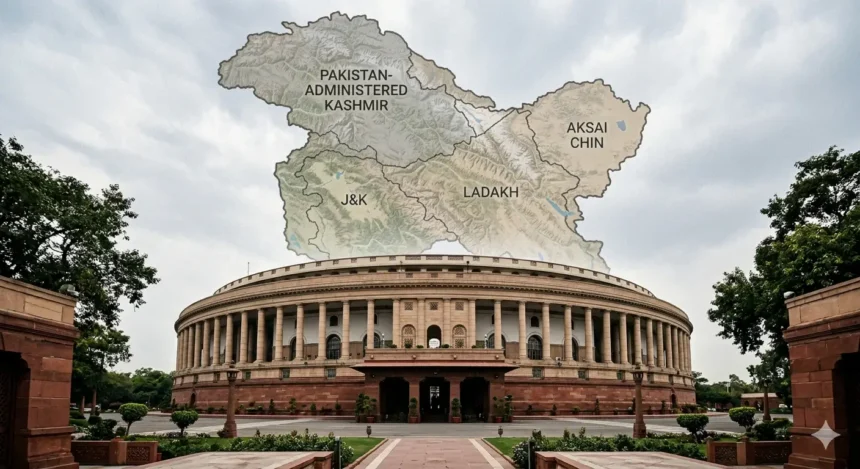
In reaction to India’s Delimitation Bill 2026, Pakistan issued a strong statement on April 17, criticizing the provision in the bill extending delimitation measures to territories occupied by Pakistan. As stated in the recent bill presented before the Lok Sabha, the measure allows the Election Commission of India to conduct delimitation procedures in territories where possible. According to the Pakistani foreign minister, it was a provocative step because, in his opinion, India had no right to delimit such territories.
However, the newly enacted bill reflects India’s official stand regarding the region of Jammu and Kashmir, which implies the integral part of the country despite being partially occupied by Pakistan. At present, 24 seats of the Jammu and Kashmir Legislative Assembly remain vacant, as no elections can be held there. Thus, India tries to establish its jurisdiction over the regions by involving them in the procedure of delimitation. In contrast, Pakistan maintains that the status of the region is still disputed.

For the Indian investors, such geopolitical events are of high importance as they affect the stock markets. Indeed, the heightened geopolitical situation in the region results in increased fluctuations in the benchmark index Nifty 50 and Sensex. There is also an increased interest shown by the investors towards defense sector stocks traded on the National Stock Exchange and Bombay Stock Exchange such as Bharat Electronics and Hindustan Aeronautics Limited because of expected increases in government spending on national security and defense. However, FIIs are likely to take a cautious approach in such an unstable situation.
In the context of the stock market, it is essential to pay attention to diplomatic news and events that are connected with the worsening situation between the two countries. Although there might be no significant changes to the economy as a result of passing of the Bill in the short term, the long-term effects of geopolitical instability will certainly have an effect on the currency, price of crude oil, and investor sentiment.
For future purposes, the following aspects will prove crucial in the analysis of this issue for any investor keeping an eye out for developments. This case study illustrates how geopolitical risks must be considered during portfolio planning, especially in relation to investments in sectors related to defense, infrastructure, and energy.
It is recommended that investors consult a SEBI registered financial advisor before investing.
Reviewed for accuracy and last updated on April 17, 2026.