


Jet Fuel Costs Could Get Relief With Possible Ceasefire As Price Surged During Crisis
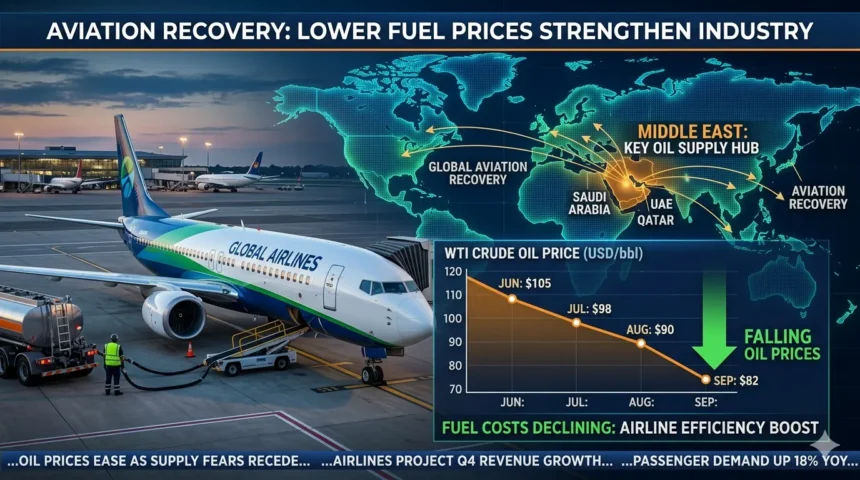
Ceasefire prospects between the US and Iran have generated optimism about reduced jet fuel prices, providing some much-awaited relief for airlines facing the dilemma of soaring operational costs.
Prices rose amid the ongoing crisis, impacting the bottom line for carriers and affecting their decisions about routing, pricing, and operations.

Market Impact of Prospective Ceasefire
- Rising airline stocks are expected after the ceasefire.
- Oil prices would move downwards following the news.
- Travel/aviation-related stock prices will rise.
Markets tend to respond promptly whenever there is geopolitical de-escalation, particularly if oil prices are impacted.
The Role of Jet Fuel in Airlines
Jet fuel is one of the biggest expense items in the airline industry, accounting for 20%-35% of operational costs.
In the crisis period:
- Jet fuel prices had more than doubled.
- Carriers had incurred huge losses due to higher fuel costs.
- Increased ticket prices had been observed worldwide.
A fall in prices will help increase profit margins for airlines.
Supply-Demand Perspective
Ceasefire impacts the energy situation in the following manner:
- War creates supply concerns → higher prices.
- Ceasefire → supply becomes favorable → price decreases.
Nevertheless, there might be some delay in normalizing the supply chain, as supply concerns persist in refinement and shipping.
Thus, the process might take time.
Analysts’ Take
Analysts claim that the current ceasefire indicates a positive move, although it does not necessarily solve all problems.
Despite the improvement in market risks, the price for fuel might still stay relatively high, as supply shortages persist.
Moreover, the shipping industry remains relatively hesitant.
Broader Context
The war resulted in:
- Oil/jet fuel price increases.
- Flights disruptions/resheduling.
- Ticket price hikes worldwide.
Thus, the recent ceasefire means the move towards stability in energy markets.
What Traders Should Pay Attention to
- Brent crude oil price movements.
- Price movements in jet fuel.
- Movements in airlines shares across the world.
- Pricing of airfares.
- Restoration of supply via Strait of Hormuz.
- Recovery in demand across travel destinations.
Is There a Bigger Signal?
The crucial question is:
Will the decline in prices result in sustained profitability for airlines, or just a respite?
In the aviation industry, high fuel prices do not mean profit margins – they determine the entire cycle.
This is classic macro trade catalyst for traders.
Because when the energy price trend reverses, one of the sectors that bounce back first is airlines.
Disclaimer:
The information contained herein should not be used as an investment guideline. The global stock market and commodity prices are inherently associated with risks. Readers are advised to seek out certified financial advisors for any financial investments.
Reviewed for accuracy and last updated on April 8, 2026.