


Oil Set to Make Wild Moves? JPMorgan Raises Alarm for Warlike Highs in Case of Hormuz Controversy
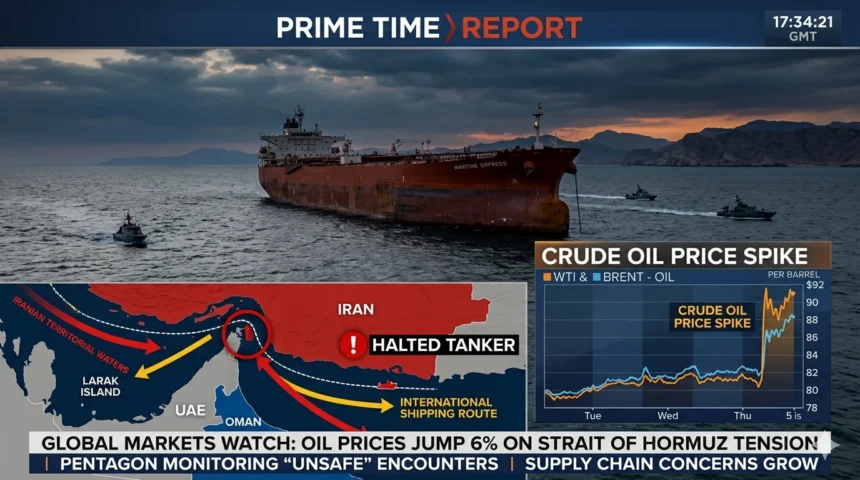
The world’s oil markets seem set for a highly volatile phase, as JPMorgan warns of potential warlike price levels in case the Strait of Hormuz crisis persists.
While geopolitical tension is already causing uncertainty in the energy sector, it currently remains one of the key commodities for traders to track.

Market Reactions Following the Warning
- Oil prices experiencing spikes in market volatility.
- Energy stocks seeing fresh demand from investors.
- Overall markets becoming wary of inflation fears.
Mention of even any slight threat of a supply disruption from the Hormuz waters is known to immediately impact oil prices.
Importance of the Strait of Hormuz
The Strait of Hormuz is an important oil bottleneck of the world:
- It handles 20% of oil trade.
- Any disruption will immediately impact supplies.
- Conflict leads to a “premium” built into prices.
Persistent disruptions could change how global oil markets operate in a moment’s notice.
Supply-Demand Shock
This is what is really behind the move:
- Supply shock → reduced supply → price increase.
- Fear-driven buying → additional increase.
- Strategic storage → temporary buffer at best.
In the case of a prolonged problem, the supply problem might outweigh demand trends and result in extreme price levels.
Analyst Comment
According to JPMorgan, one danger is:
Should disruptions continue, the price of oil may rise to levels not seen since geopolitical crises, where supply shock led to a spike in prices.
Market analysts believe that markets are currently mispricing the time-risk factor, leading to abrupt spikes.
Overall Picture
This event is happening against the background of:
- Rising global inflation expectations.
- Uncertainty regarding central bank policies.
- Weaker economic recovery prospects in critical regions.
An extended run-up in oil prices would:
- Increase inflation.
- Postpone rate cuts across the globe.
- Impact equity markets.
What Traders Need to Be Aware Of
- Movements and security developments in the Strait of Hormuz.
- Resistance areas for Brent crude oil.
- Momentum in energy stocks worldwide.
- Inflation numbers and monetary policy reaction.
- Any diplomatic progress.
Greater Significance for Markets
The critical issue to be determined is whether this represents:
A mere blip on the radar or the beginning of an oil supercycle catalyst?
Since when oil moves into extreme territory, it affects not only commodities but also:
- Inflation dynamics.
- Expectations for interest rates.
- International equity movements.
To traders, this isn’t just any headline.
It’s a macro signal that could move whole markets.
Ignore it at your peril – and miss out on one of the most lucrative trades available today.
Disclaimer:
The above discussion is intended for educational purposes and should not be considered as financial advice. The commodities market is very dynamic and subject to geopolitics-related risks.
Reviewed for accuracy and last updated on April 10, 2026.