


India Inflation April 2026 Hits 3.8%: What It Means for Your Money and RBI Policy
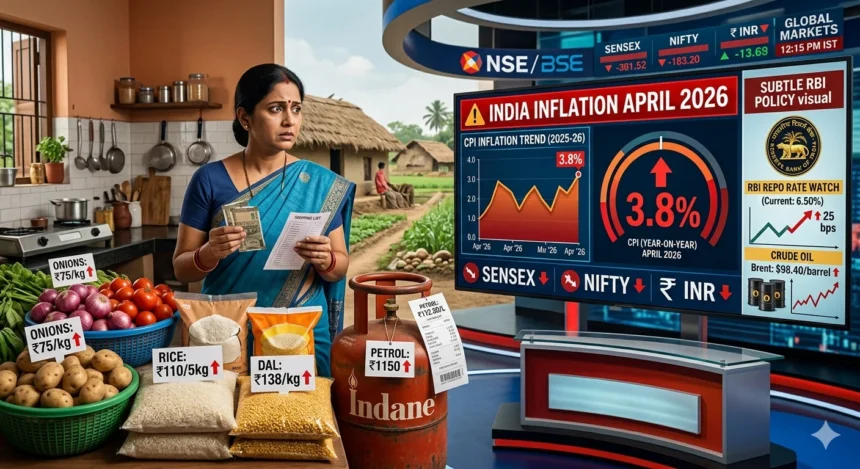
Inflation in India April 2026 jumped to 3.8 percent, which is an all-time high of 13 months, indicating that there will be pressure on family budgets, even though inflation is within the targeted level set by the Reserve Bank of India. Data on the latest Consumer Price Index (CPI) has been released by the Ministry of Statistics, which showed inflation had risen to 3.8 percent from 3.4 percent recorded in March 2026. Inflation was mostly driven by food prices and increasing costs in rural India.
India inflation April 2026
Food inflation stood at 4.20 percent in April, being the key driver behind the rising levels of consumer prices. There were increases in vegetable prices, cereals, edible oil, and pulse prices. At the same time, experts have pointed out that there is a risk associated with supply problems due to weather changes before the start of the monsoon season. El Nino phenomenon poses serious risks to crop production.

Inflation pressures in the countryside were also rising faster relative to those in the urban areas, as pressures mounted on household spending on necessities in the non-urban locations. Experts note that higher prices for transportation, fuels, and volatile food items seem to be putting pressure on the purchasing power of rural consumers. The inflation trend can affect the demand pattern in terms of consumption as well if the trend is sustained above the current level.
Despite the increase, the April inflation figure is still below the 4% target set by the RBI in the medium term, along with a 2%-to-6% margin for flexibility. Members of the RBI have continually emphasized that despite strong economic growth, the management of inflation still remains a top priority. Participants in the market widely anticipate an unchanged monetary policy decision from the RBI in its June 2026 meeting.
There are many economists who think that the pressure on inflation could be sustained. According to various projections from the private sector, the country’s CPI inflation rate in May 2026 might reach up to 4.1%. It might be because of high crude oil prices, since there have been indications that Brent crude oil prices are trading above $105 per barrel, creating worries about imported inflation.
The other significant risk element under the microscope is the weak rupee. As mentioned before, depreciation of the domestic currency can lead to imported inflation, because the country is reliant on importing oil. Another problem with the weak rupee would be that of imported inflation because, in a scenario where global commodity prices continue to be high in addition to the weak currency, inflation could continue to stay sticky.
The financial markets responded cautiously to the inflation report, with bond yields staying steady as markets anticipate the RBI keeping its policy rate on hold. The equity markets are equally watching inflation closely as rising inflation could have an impact on corporate profits and consumer spending.
On balance, although India inflation April 2026 is still within the RBI’s comfort zone, the gradual rise in food prices, crude oil, and foreign exchange risk indicates that policymakers could take a conservative stance moving forward.
Disclaimer: Investing in securities involves inherent market risks. Read all relevant documents carefully before making any investment. This piece is meant purely for information and is not intended to serve as financial or investment advice. Investors must seek professional
Reviewed for accuracy and last updated on May 13, 2026.