


Increase in Tinplate Prices Sparks Cost Cascades – Is Margin Pressures on FMCGs Likely?
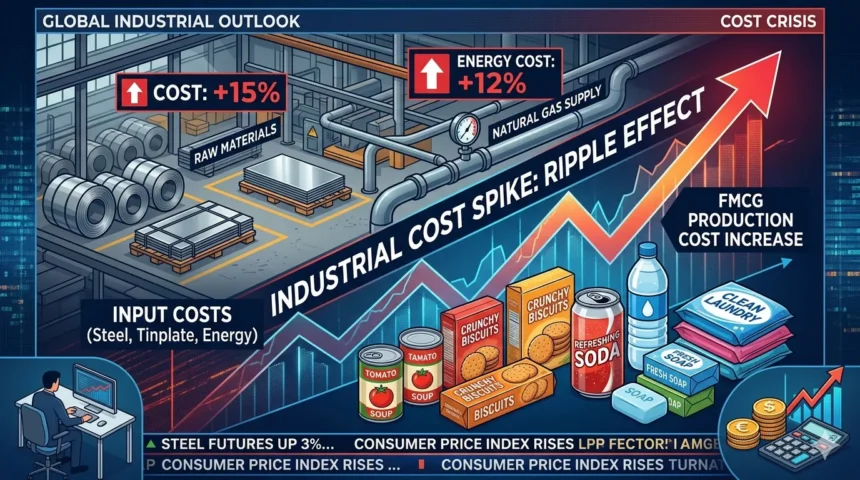
Following the tightening in the supply of gas, steel producers have increased the price of tinplate, a step which will force FMCGs to incur additional costs in their packing processes.
Used extensively in manufacturing food cans, aerosols, and packaging products, tinplate serves as an essential ingredient for consumer goods firms.

Near-term Reaction from Markets
- Upstream steel sector stock prices will be seen rising.
- Margin pressures in FMCGs could emerge.
- Indices such as Nifty 50 could witness no movements but divergence at sector level.
News of cost-related issues usually prompts switching between the upstream and downstream sectors.
Why Is There an Increase in Prices?
This is mainly due to:
- Gaps in gas supply causing higher production costs.
The increased cost of energy inputs forces steel companies to pass the responsibility through increased prices.
Supply-Demand Perspective
The scenario depicts a standard example of the commodity chain effect:
- Gas shortage leads to rise in production cost.
- Rise in steel prices results in increase in FMCG production cost.
- End-product pricing could lead to consumer effect.
There is a chain effect within the value chain that affects the supply and pricing aspects.
Analyst Perspective
According to market analysts, margins will vary based on pricing ability.
“Companies that have strong brand margins can pass their cost but others would face margin contraction,” remarked a market expert.
Pricing ability plays a crucial role in sustaining profits.
General Scenario
The event follows:
- Highly volatile oil prices.
- Disruptions in supply of industrial inputs.
- Increased emphasis on cost optimization in all sectors.
Inflation based on commodity prices continues to affect business performance.
What Traders Should Look Out For
- Price realization patterns in steel manufacturing firms.
- Pricing strategies by FMCG firms in future quarters.
- Fluctuations in raw material and energy costs.
- Margin guidance by firms on a quarterly basis.
- Consumers’ reactions to price adjustments.
The Larger Picture
The domino effect of rising input costs prompts the following inquiry:
Do FMCG firms internalize the impact or shift it to the consumer?
Since in such an environment, pricing power separates the successful from the struggling.
From the perspective of traders, it’s a textbook case of how benefits upstream could translate into losses downstream.
Disclaimer:
The content of this article is purely informative and should not be considered financial advice. Commodities and equities markets are inherently risky. Investors are recommended to seek professional financial advice before making any financial moves.
Reviewed for accuracy and last updated on April 7, 2026.