



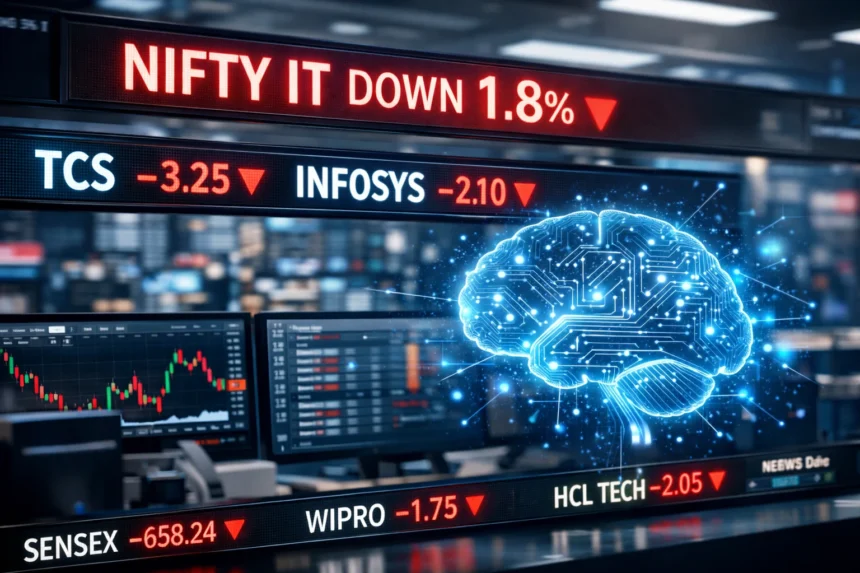
IT stocks declined after a brokerage report warned that rapid AI adoption could disrupt traditional outsourcing-driven revenue models.
Nifty IT Falls 1.8% as TCS, Infosys and HCLTech Slide on AI-Led Disruption Concerns
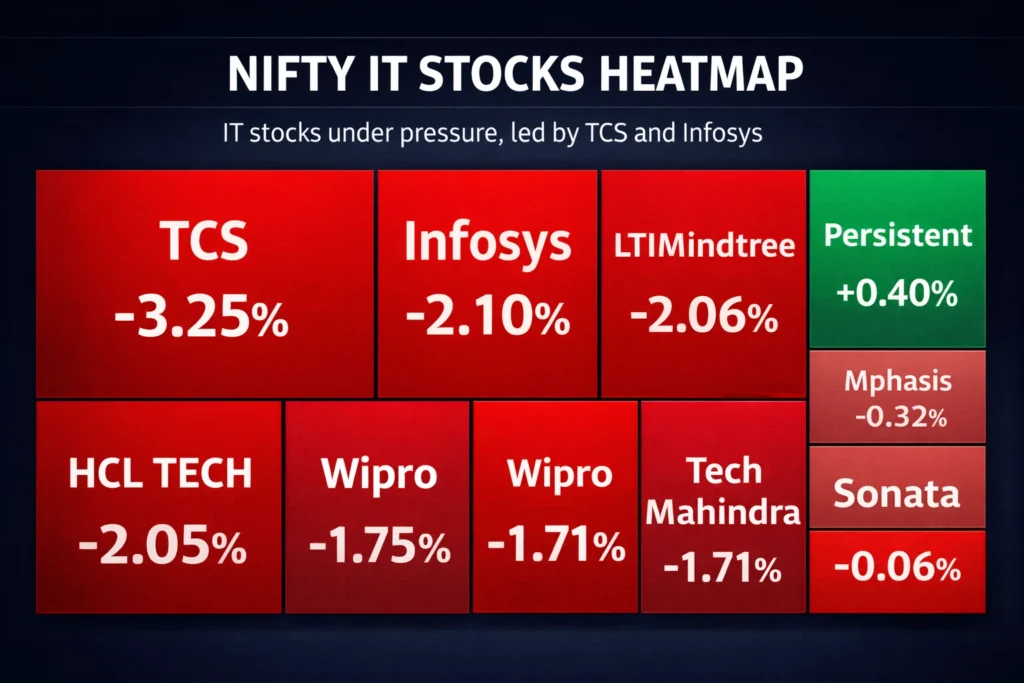
The Nifty IT index opened 1.8% lower on Tuesday, led by losses in heavyweight stocks TCS, Infosys, and HCLTech, following a sector note that highlighted the risks posed by the growing adoption of artificial intelligence (AI) in the industry.

TCS and Infosys were down by as much as 2.3%, while HCLTech was down by almost 2%. Wipro and Tech Mahindra were also trading lower.
The fall in the IT stocks came after a global brokerage firm issued a sector note, highlighting that the use of generative AI could potentially disrupt the outsourcing business model that the $250 billion IT services industry in India is based on.
What Caused the Sell-Off?
According to the report, the widespread adoption of AI in global companies could bring down the number of billable hours in time and material contracts, which has been the traditional source of revenue for Indian IT companies for a long time.
- The brokerage firm identified three important issues:
- Automation of coding and maintenance work
- Pricing pressures due to demands for productivity gains
- Margin risks during the transition to outcome-based pricing
Although the report pointed out that AI also opens up new opportunities for growth in the areas of advisory and digital transformation, it also stated that the transition period could impact revenue visibility.
Why Investors Are Reacting
IT stocks have always fetched a higher multiple due to the predictability of earnings and contracts. Therefore, any kind of structural change that affects this predictability is bound to make investors cautious.
The utilization rate, which is an important profitability ratio that measures the engagement of employees, may also face scrutiny if automation increases.
“AI is both an efficiency enabler and a disruptor,” said a market analyst in Mumbai. “Investors are rethinking how quickly traditional delivery models could have evolved.”
Structural Transition or Temporary Volatility?
The Indian IT industry has faced technology transitions in the past, such as cloud migration and digital transformation. Analysts point out that these transitions led to initial pricing worries before the industry adjusted their service delivery.
Recent statements from top IT industry management indicate an increase in AI deal pipelines and upskilling projects. But productivity growth from automation might temper traditional growth tied to headcount expansion.
Analysts pointed out that despite Tuesday’s fall, the long-term demand for enterprise technology services is not in question, especially in the areas of cybersecurity, cloud optimization, and data modernization.
For now, market watchers are expected to keep a keen eye on upcoming earnings calls for more information on AI-driven revenue streams, margins, and deal wins.
The 1.8% fall in the Nifty IT index highlights a broader revaluation, not of demand for technology services, but of the potential AI-driven impact on the sector’s economics.
Disclaimer
This article is for information purposes only and not a form of investment advice. Investment in the market involves risks. It is advised that readers consult certified financial advisors before making investment decisions.
Reviewed for accuracy and last updated on February 24, 2026.