




It is one of those things that people put off until something comes along and forces their hand. A new baby. A home mortgage. A health concern. And then, suddenly, the question becomes pressing: What would happen to my family if I were no longer around?
The easiest and cheapest way for Americans to protect their loved ones is through term life insurance. It offers a safety net in case you die during a certain time period.

 Join WhatsApp
Join Now
Join WhatsApp
Join Now
 Join Telegram
Join Now
Join Telegram
Join Now
For those who are just starting out, it can be confusing:
- How much will it cost me?
- How long do I need it for?
- Do I even need it at this point in my life?
This guide will help you understand term life insurance in simple terms so that you can make an informed decision.
What is Term Life Insurance?
Term life insurance insures you for a specific term, which is usually 10, 20, or 30 years.
If you die during the term, your loved ones will get a lump sum payment called a death benefit. They can use this amount for:
- Rent/mortgage payments
- Child care and education
- Living expenses
- Medical bills
- Debts
But if the term is over and you are still alive, the insurance policy will lapse. No money changes hands.
This is why term insurance is so cheap. You are not investing in anything.
You are investing in protection.
Why Term Life is Popular in the U.S.
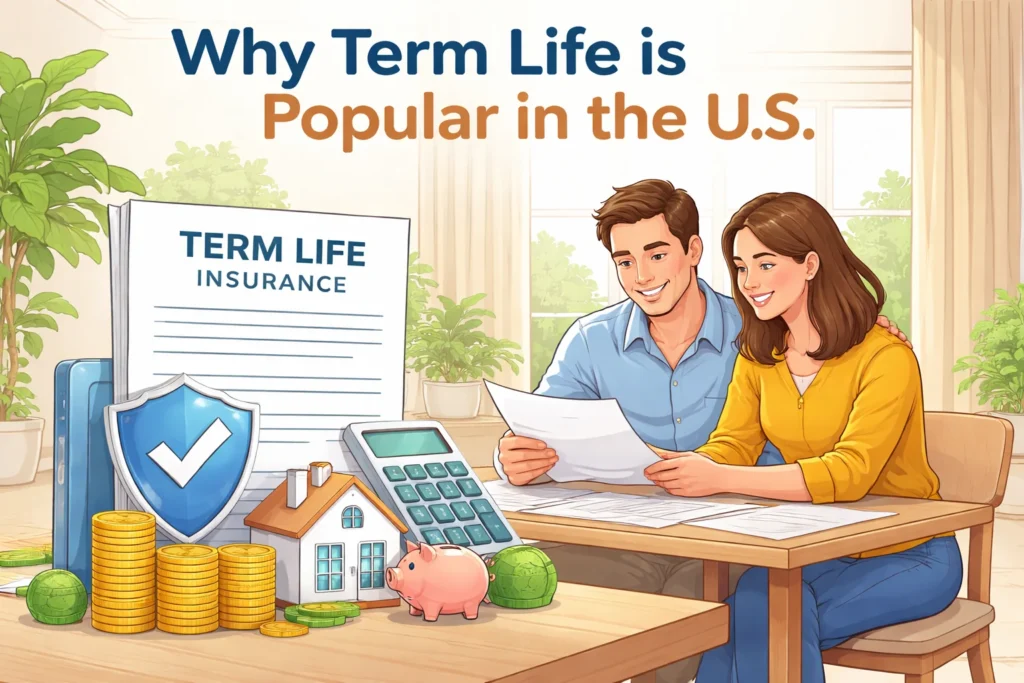
Most people require financial coverage at certain points in their lives:
- When they have young children
- While they have an outstanding mortgage
- When they have only one income to support multiple people
The years covered by term life insurance.
In regard to permanent insurance, term life insurance has the following advantages:
- It is much less expensive on a monthly basis
- It is straightforward
- It is easy to compare rates among different companies
- It has one purpose: income protection
It is the best option for many families.
How a Term Life Policy Works
- You select the term length (10-30 years)
- You select the coverage amount
- You pay a premium (monthly or yearly)
- The coverage remains active throughout the term
- If you die during the term, the payment goes to your beneficiaries
The premium is mostly fixed.
A healthy 30-year-old person may have to pay $20-$30 per month to get coverage of hundreds of thousands of dollars.
How Much Coverage Do You Need?
- 10 to 15 times your annual salary
And then there are these factors to consider:
- Mortgage balance
- Bills to pay
- Number of dependents
- Education expenses
- Spouse’s income
The idea is simple: Replace what your family would have lost if you were no longer around.
Too little, and there are gaps.
Too much, and it stretches your budget.
Choosing the Right Term Length
Match insurance to responsibility:
- 10 years – Short-term needs
- 20 years – Growing families
- 30 years – Long mortgages, single-income homes
A 30-year term is common for first-time buyers because it covers peak earning years.
Term vs. Whole Life Insurance
| Feature | Term Life | Whole Life |
|---|---|---|
| Duration | Fixed term | Lifetime |
| Cost | Low | High |
| Cash value | No | Yes |
| Complexity | Simple | Complex |
| Best for | Income protection | Estate planning |
Whole life mixes insurance with savings. It’s far more expensive and unnecessary for most beginners.
Term life focuses on protection.
What Affects Your Price?
Insurers evaluate risk:
- Age
- Health
- Smoking status
- Medical history
- Lifestyle
- Coverage amount
- Term length
The younger and healthier you are, the cheaper it is.
That’s why many people lock in policies early.
Medical Exams and Applications
Some policies require:
- Height and weight
- Blood pressure
- Blood sample
- Health questions
Others offer “no-exam” policies at slightly higher rates.
The exam isn’t a trap-it keeps prices low for healthy applicants.
When Term Life Makes Sense
Term life is ideal when:
- Someone depends on your income
- You have long-term debts
- You’re building a family
- You want affordable protection
- You don’t need an investment product
If no one relies on your income, you may not need it yet.
Insurance is about responsibility, not age.
Common Myths About Term Life
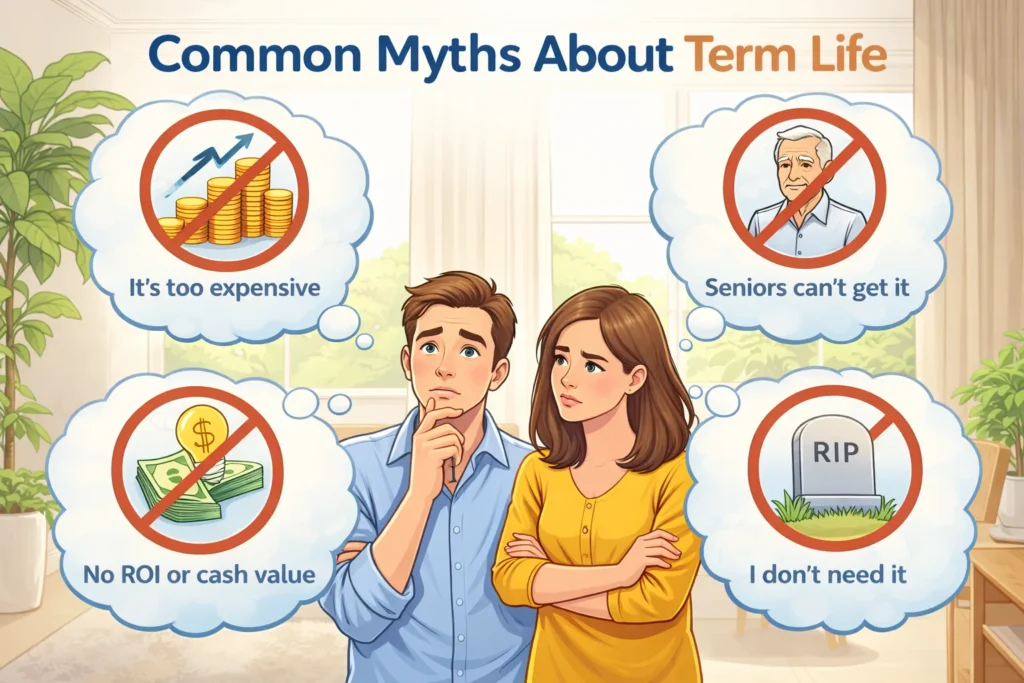
“It’s a waste if I don’t die.” -> It’s protection, not a lottery.
“Only parents need it.” -> Anyone with dependents does.
“Work insurance is enough.” -> Employer plans are small and temporary.
How to Buy Term Life Insurance
Most Americans shop online:
- Compare quotes
- Adjust coverage
- Apply digitally
- Get approved quickly
Prices vary widely.
A few minutes of comparison can save thousands over time.
Conclusion
Term life insurance isn’t about predicting tragedy.
It’s about preparation.
It gives your family room to breathe.
Room to grieve.
Room to adjust.
You don’t need to be rich.
You don’t need complex products.
You only need protection during the years that matter.
That is exactly what term life insurance provides.
Written By Nakul
Disclaimer
This article contains general information and should not be considered as insurance, financial, or legal advice. The terms and conditions of policies, as well as their premiums and eligibility, differ from one insurance company to another and from one individual to another. It is always advisable to consult a licensed insurance agent before buying any insurance policy.
Reviewed for accuracy and last updated on January 26, 2026.