



Best Beginner Credit Cards in the USA for 2026
Getting your first credit card is a major milestone. It’s often the point when you begin to establish your financial identity in the USA. However, for newbies, the experience can be daunting. Which credit card will accept you? Which one won’t leave you stuck in a fee cycle? And how can you avoid damaging your credit before it even begins?
The best beginner credit card can help you establish an excellent credit history, give you access to better rates down the line, and teach you how to handle money effectively. The worst one can have the reverse effect.

In 2026, banks have more beginner-friendly credit cards than ever before. This guide will walk you through the best beginner credit cards available in the USA and how to pick the one that suits you.
How This Guide Helps First-Time Cardholders
This resource is intended to assist first-time credit card holders in learning about beginner-friendly credit cards and how they function. This resource will concentrate on the credit-building function, fees, and responsible usage rather than promoting debt and overspending.
What Makes a Credit Card “Beginner-Friendly”?
A good starter card does three things:
- Approves people with little or no credit
- Keeps costs low
- Reports to all three credit bureaus
Beginner cards usually come in three types:
- Student cards – For college and trade school students
- Secured cards – Backed by a refundable deposit
- Entry-level unsecured cards – For thin or limited credit
The goal isn’t flashy rewards. It’s building a track record that lenders can trust.
About the Cards Mentioned Below
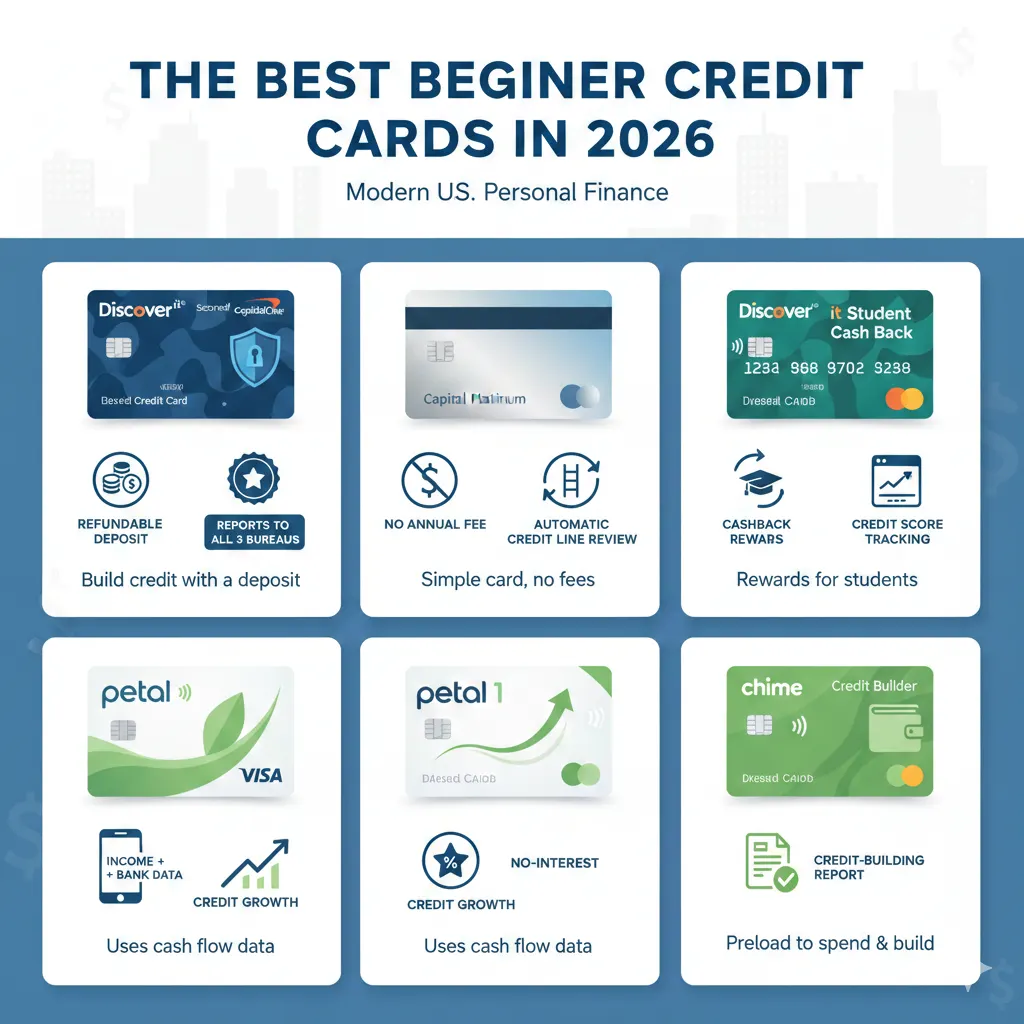
The cards listed below are examples of beginner-friendly credit cards commonly available in the United States. They are not ranked by quality or endorsement, and availability depends on individual credit profiles and issuer criteria.
The Best Beginner Credit Cards in 2026
These cards are widely available in the U.S., known for fair terms, and designed for people just starting out.
Discover it® Secured Credit Card
- Refundable security deposit
- Reports to all three bureaus
- Cashback rewards
- Automatic review for upgrade
This card is often considered the gold standard for beginners who don’t yet qualify for unsecured cards.
Capital One Platinum
- No annual fee
- Designed for limited credit
- No deposit required
- Automatic credit line reviews
A simple, no-frills card that helps you build history without extra cost.
Discover it Student Cash Back
- For enrolled students
- No annual fee
- Cashback rewards
- Free credit score tracking
Great for students who want rewards while building credit responsibly.
Petal 1 Visa
- No annual fee
- Uses income and bank history
- Designed for new credit users
- Gradual limit increases
Petal looks beyond traditional credit data, making it popular with first-time applicants.
Chime Credit Builder
- No interest charges
- No credit check
- Works like a debit card
- Builds credit history
This option is unique. You preload money and spend it, but it still reports as credit usage.
Quick Comparison
| Card | Annual Fee | Deposit | Best For |
|---|---|---|---|
| Discover Secured | $0 | Yes | No credit |
| Capital One Platinum | $0 | No | Limited credit |
| Discover Student | $0 | No | Students |
| Petal 1 | $0 | No | Thin files |
| Chime Builder | $0 | No | Total beginners |
Each of these cards focuses on accessibility and credit-building, not luxury perks.
How Beginner Cards Help Build Credit
Every time you:
- Pay on time
- Keep balances low
- Use the card regularly
You send positive signals to credit bureaus.
Payment history and credit utilization are the two biggest factors in your credit score. A beginner card gives you a safe way to manage both.
After six to twelve months of responsible use, many people qualify for:
- Higher credit limits
- Better interest rates
- Rewards cards
- Auto or personal loans
Your first card is a bridge to everything else.
What to Watch Out For
Some starter cards come with hidden traps:
- High annual fees
- Monthly maintenance fees
- Expensive “credit builder” add-ons
- Very high APRs
A beginner card should not charge you just for owning it.
APR matters less if you pay in full every month-but fees hurt no matter what.
How to Use Your First Card Safely
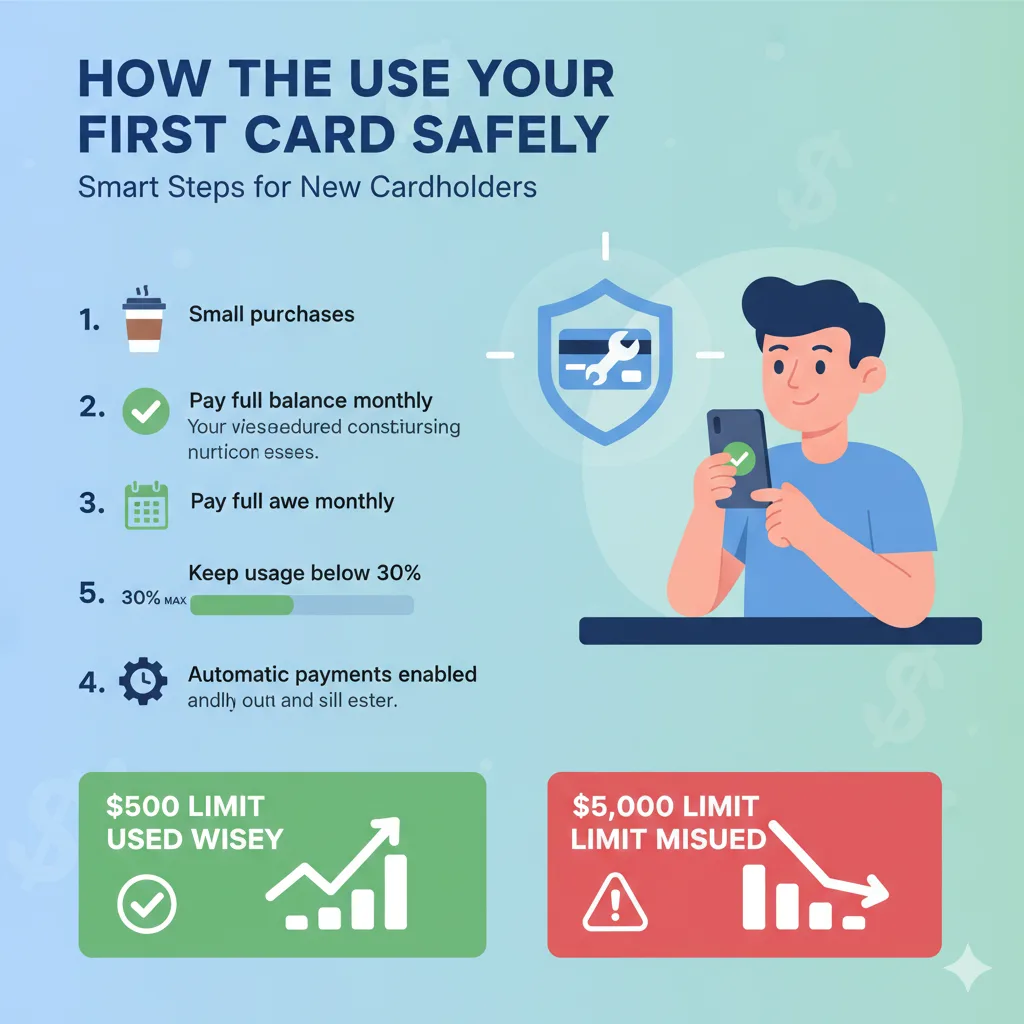
The smartest beginner strategy is simple:
- Use the card for one or two small purchases
- Pay the full balance every month
- Keep usage below 30% of the limit
- Set up automatic payments
This turns your card into a tool, not a debt source.
A $500 limit used responsibly is more powerful than a $5,000 limit misused.
When to Upgrade
Most beginners outgrow their first card within a year.
Signs it’s time:
- You’ve paid on time for 6-12 months
- Your credit score has risen
- You’re offered higher limits
- You qualify for rewards cards
Many issuers automatically upgrade secured cards to unsecured ones and return your deposit.
Common Beginner Myths
“I need to carry a balance to build credit.”
You don’t. Paying in full is better.
“One late payment won’t matter.”
It can drop your score for years.
“All starter cards are the same.”
Fees and terms vary widely.
The Consumer Financial Protection Bureau (CFPB) explains how credit cards affect your credit history and rights as a cardholder:
https://www.consumerfinance.gov/consumer-tools/credit-cards/
Conclusion
Your first credit card isn’t about rewards or status. It’s about creating a financial record that follows you for years.
The best beginner credit cards in the USA focus on access, fairness, and growth. They help you learn the system without punishing mistakes.
Choose a card that keeps costs low, reports your activity, and gives you room to grow. Use it carefully. Pay on time. Keep balances small.
Do that, and your first card becomes the foundation for everything that comes next.
Written By Nakul
Disclaimer
This article is for informational purposes only and does not constitute financial advice. Credit card terms, approval criteria, and interest rates vary by issuer and individual credit profile. Always review official card disclosures and consult a qualified financial professional before making financial decisions. Information is accurate to the best of our knowledge at the time of publication and may change.
Reviewed for accuracy and last updated on January 31, 2026.