



How Credit Scores Work in the USA (A Simple Guide)
For many Americans, a credit score feels like a mystery number that somehow controls their financial life.
You don’t see it. You don’t choose it. But it can decide whether you get approved for a credit card, qualify for a mortgage, or pay hundreds more each month on a car loan.

The truth is, credit scores aren’t complicated-but they are misunderstood.
This guide explains how credit scores work in the U.S., using plain English, real-world examples, and practical context. No finance degree required.
What a Credit Score Really Is
A credit score is a number that tells lenders one thing:
How risky is it to lend you money?
In the United States, most credit scores fall between 300 and 850. The higher the number, the safer you look to lenders.
Think of it like a financial trust score. If you’ve borrowed money before and paid it back on time, your score goes up. If you’ve missed payments or maxed out cards, your score goes down.
That’s it. No magic. No hidden trick.
Who Tracks Your Credit in the U.S.?
Your credit activity is tracked by three major credit bureaus:
- Experian
- Equifax
- TransUnion
These companies don’t lend money themselves. Instead, they collect information from banks, credit card issuers, auto lenders, and loan companies.
Each bureau keeps a credit report on you. That report is then used to calculate your credit score.
Why You Don’t Have Just One Credit Score
Here’s something many people don’t realize:
You actually have multiple credit scores.
The two most common scoring models are:
FICO Score
This is the big one. About 9 out of 10 lenders use FICO scores when making lending decisions.
VantageScore
This model was created by the credit bureaus themselves. Many free credit apps show this score.
Both use similar information, but the numbers can differ slightly. That’s normal.
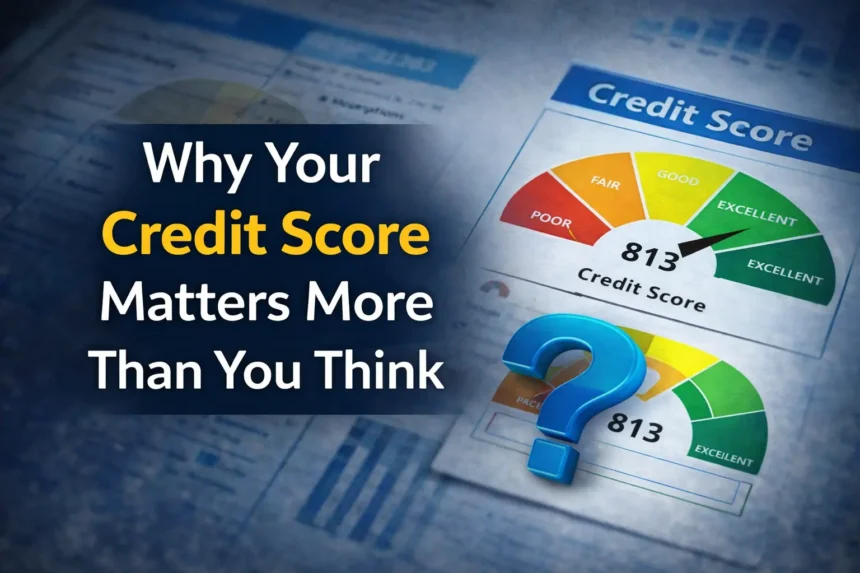
What Is Considered a “Good” Credit Score?
Most lenders see credit scores like this:
- 800-850: Excellent
- 740-799: Very good
- 670-739: Good
- 580-669: Fair
- Below 580: Poor
If your score is 670 or higher, you’re generally in good shape. Below that, borrowing becomes more expensive-and sometimes impossible.
The Five Things That Actually Affect Your Score
Despite what some myths suggest, your credit score is based on a small set of factors.
1. Paying Bills on Time (The Biggest Factor)
Payment history matters more than anything else.
If you consistently pay your bills by the due date, your score benefits. If you pay late-or not at all-it suffers.
Even one missed payment can stay on your credit report for up to seven years.
2. How Much Credit You’re Using
This is called credit utilization, and it’s one of the most overlooked factors.
Example:
- Credit limit: $5,000
- Balance: $2,500
That’s 50% utilization-and that’s high.
Most experts recommend keeping usage below 30%, and ideally under 10%.
3. How Long You’ve Had Credit
Lenders like to see a long history of responsible borrowing.
That’s why closing your oldest credit card can sometimes hurt your score-even if you never use it.
Age equals trust.
4. The Types of Credit You Use
A mix of credit accounts can help, such as:
- Credit cards
- Student loans
- Auto loans
- Mortgages
You don’t need all of these. But showing you can handle more than one type helps.
5. Applying for New Credit
Every time you apply for credit, a hard inquiry is added to your report.
One or two won’t hurt much. Too many in a short period can be a red flag.
How Often Credit Scores Change
Your credit score isn’t updated once a year. It can change every month, sometimes faster.
Common triggers include:
- Paying off a card
- Carrying a higher balance
- Missing a payment
- Opening or closing an account
This is why checking your score regularly makes sense.
How to Check Your Credit Score for Free
You don’t need to pay for your credit score.
Many U.S. banks and credit card issuers offer free access. You can also get your full credit report once a year from:
AnnualCreditReport.com (the official government-backed site)
Checking your own credit does not lower your score.
Why Your Credit Score Matters in Real Life
A credit score isn’t just about loans.
It can affect:
- Mortgage approval and interest rates
- Car loan payments
- Credit card limits
- Apartment applications
- Insurance premiums (in some states)
A higher score can literally save you thousands of dollars over time.
Common Credit Score Myths
Myth: Carrying a balance helps your score
Truth: Paying in full is better
Myth: Income affects your score
Truth: Income is not part of credit scoring
Myth: Checking your score hurts it
Truth: Only hard inquiries matter
How to Improve Your Credit Score (Realistically)
There’s no overnight fix, but there is a path forward.
- Pay everything on time
- Lower credit card balances
- Stop applying for unnecessary credit
- Keep old accounts open
- Review reports for errors
Small improvements add up faster than most people expect.
How Long It Takes to Build or Fix Credit
- New credit users: 6-12 months
- Moderate improvement: 3-6 months
- Major damage recovery: several years
Credit is a long game-but it rewards consistency.
Final Takeaway
Your credit score isn’t about being perfect. It’s about being predictable and responsible.
Once you understand how the system works, it becomes much easier to work with it instead of feeling stuck or confused by it.
For most Americans, learning how credit scores work is one of the most valuable financial lessons they’ll ever learn.