


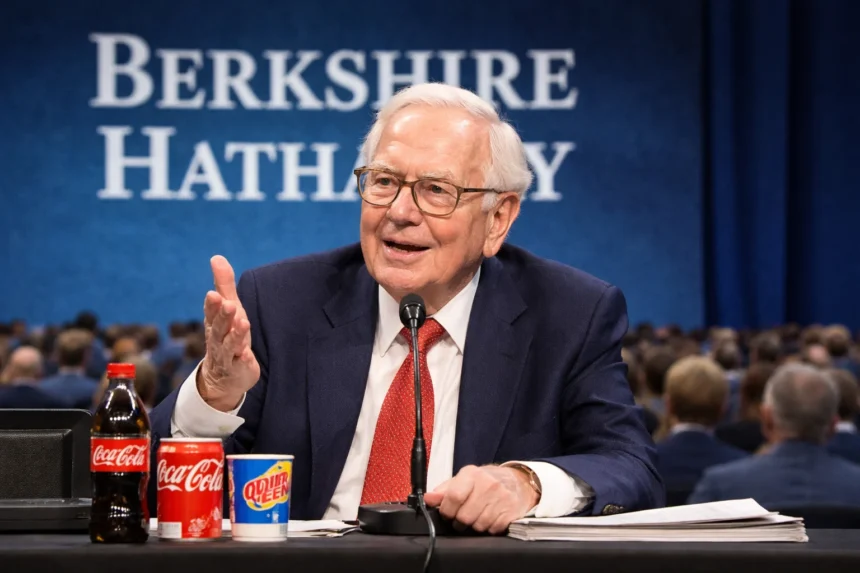
For decades, Warren Buffett has been more than just a CEO. He has been the face of American investing, a trusted voice during market chaos, and the steady hand behind Berkshire Hathaway’s massive empire.
So what happens if one day, Buffett steps aside?

While there is no official announcement today, investors and analysts have long prepared for the moment when the “Oracle of Omaha” eventually hands over the reins. Buffett himself has openly discussed succession planning, making it clear that Berkshire Hathaway is built to outlast him.
Still, the idea of Buffett resigning as CEO would send shockwaves through Wall Street.
This article explores what such a moment could look like, how markets might react, and what it would mean for Berkshire Hathaway’s future.
A Company Built Around One Man
Berkshire Hathaway is not just another conglomerate. It owns or controls businesses across insurance, railroads, energy, retail, manufacturing, and consumer goods. Companies like GEICO, BNSF Railway, Dairy Queen, and dozens more sit under its umbrella.
But the brand of Berkshire has always been inseparable from Buffett himself.
His annual shareholder letters are studied like textbooks. His investment philosophy shapes generations of fund managers. Even people who have never owned a Berkshire share know his name.
That’s why any hypothetical resignation would feel historic.
The Succession Plan Is Already in Place
What separates Berkshire from many other companies is preparation.
Buffett has repeatedly stated that the company has a clear plan for leadership transition. Greg Abel, currently vice chairman overseeing non-insurance operations, is widely viewed as the next CEO. Ajit Jain, who runs Berkshire’s insurance businesses, plays a critical role as well.
In other words, the company is not waiting until the last minute.
Berkshire’s board has been vocal that the next CEO will not try to “be” Buffett. The focus will be on maintaining the company’s culture: long-term thinking, decentralized management, and disciplined capital allocation.
How Markets Might React
Even with preparation, the market reaction to Buffett stepping down would likely be emotional.
In the short term, Berkshire shares could see volatility. Some investors may sell simply because the legendary leader is no longer in charge. Others might see it as a buying opportunity, trusting the system Buffett built.
History suggests that markets often overreact to leadership changes, especially when the leader is iconic. Over time, performance-not personality-tends to matter most.
If Berkshire continues delivering steady earnings and smart investments, confidence would likely return.
Why Buffett’s Influence Won’t Vanish Overnight
Even after stepping down, Buffett’s influence would remain embedded in Berkshire’s DNA.
The company’s structure is unique:
- Subsidiaries operate independently
- Headquarters remains small
- Long-term value is prioritized over quarterly hype
These principles are not tied to a single person. They are institutional habits.
Buffett has spent decades shaping not just a company, but a mindset. That doesn’t disappear with a title change.
What It Means for Everyday Investors
For many U.S. investors, Berkshire Hathaway is seen as a “set it and forget it” stock. It represents stability, patience, and disciplined growth.
A Buffett resignation might cause some holders to reassess, especially those who invested primarily because of trust in him personally.
But Berkshire is not a startup driven by one visionary. It is a mature, diversified powerhouse with deep management talent and massive cash reserves.
Long-term investors would likely shift their focus from “Who is in charge?” to “Is the business still strong?”
The Emotional Weight of a New Era
Warren Buffett is not just a CEO. He is a symbol.
His departure would mark the end of an era in American finance. It would feel similar to the retirement of a legendary athlete-expected, prepared for, yet still emotional.
Media coverage would be intense. Financial news would replay decades of quotes, deals, and lessons. The annual meeting in Omaha would feel different.
But markets move forward. They always do.
Berkshire Without Buffett: Still a Giant
Even without Buffett at the helm, Berkshire Hathaway would remain:
- One of the largest companies in the U.S.
- A major holder of cash and equities
- A dominant force in insurance and railroads
- A cornerstone in many long-term portfolios
The company’s scale, diversity, and financial strength do not disappear with a leadership change.
If anything, the true test of Buffett’s legacy will be how well Berkshire performs after he is no longer CEO.
A Transition, Not a Collapse
A Buffett resignation would not mean the end of Berkshire Hathaway.
It would be a transition—carefully planned, deeply considered, and closely watched.
For investors, the key question would shift from “What would Buffett do?” to “Is Berkshire still executing?”
And if history is any guide, the company he built is designed to answer that question with steady performance rather than dramatic headlines.
Disclaimer
This article is a hypothetical, forward-looking scenario created for informational and editorial purposes only. As of the time of writing, Warren Buffett has not resigned as CEO of Berkshire Hathaway. The content does not represent real news, official statements, or confirmed events.
Nothing in this article should be considered financial, legal, or investment advice. The analysis reflects general market behavior and public knowledge about Berkshire Hathaway’s structure and succession planning. Readers should verify all information with primary sources and consult qualified professionals before making any investment decisions.
This content is intended to educate and inform readers about how markets might respond to major leadership changes in large corporations.
Reviewed for accuracy and last updated on January 13, 2026.