


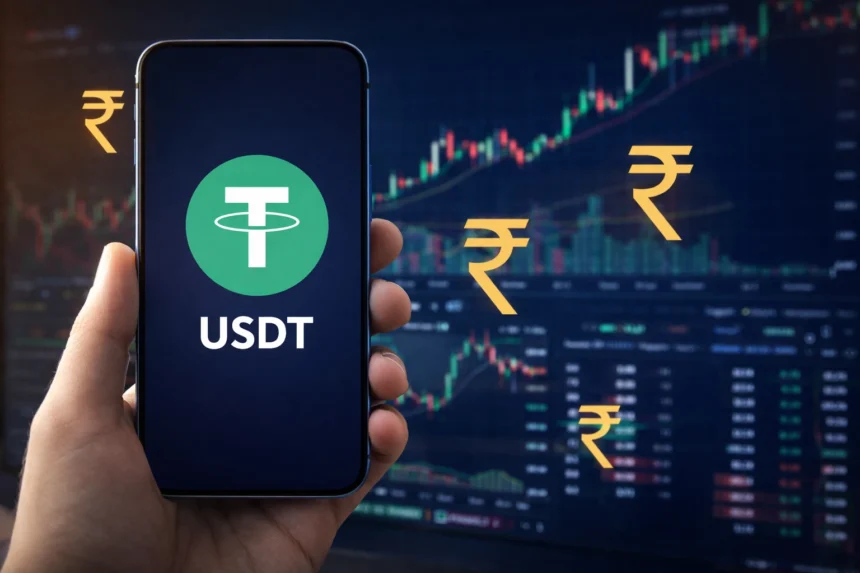
Cryptocurrency has long ceased to be a niche subject among Indians. Everyone-from college students to small business owners-is wading into the world of digital assets. In this growing world of crypto, one name pops up everywhere-USDT, popularly known as Tether.
If you’ve ever used a cryptocurrency exchange, then chances are you’ve come across these trading pairs: BTC/USDT, ETH/USDT, or INR/USDT. What, however, is USDT? Why is it this popular? And most importantly, is USDT safe And most importantly, is USDT safe and legal to use for users from India?

Well, that notwithstanding, I will break it down for you in simple language.
What is USDT?
USDT (Tether) is a “Stable Coin,” referring to a class of cryptocurrencies that attempt to peg their exchange rate to another asset’s exchange rate, regardless of whether that other asset is another cryptocurrency or an “asset” in
1 USDT = 1 USD
While Bitcoin or Ethereum value fluctuates wildly up and down, the value of USDT remains stable. It has been pegged based on reserves held by Tether Limited, the issuer of the coin.
Basically, it may be said that it is an electronic version of the United States currency that may send, receive, and even transact using blockchain.
Why is USDT So Popular?
USDT is currently the most-traded cryptocurrency in volume around the world. It’s used more actively compared to Bitcoin.
Here is why people love it:
- Protects the users against the volatility of the crypto market.
- It is cheap and efficient to transfer.
- It works on multiple blockchains: TRC20, ERC20, BEP20,
- It is accepted on almost every crypto exchange
- It acts as a “parking space” for money during market crashes
For Indian users, USDT has become a bridge between INR and global crypto markets.
How Indians Use USDT Today
In India, USDT is used in several practical ways:
1. Trading Pair on Exchanges
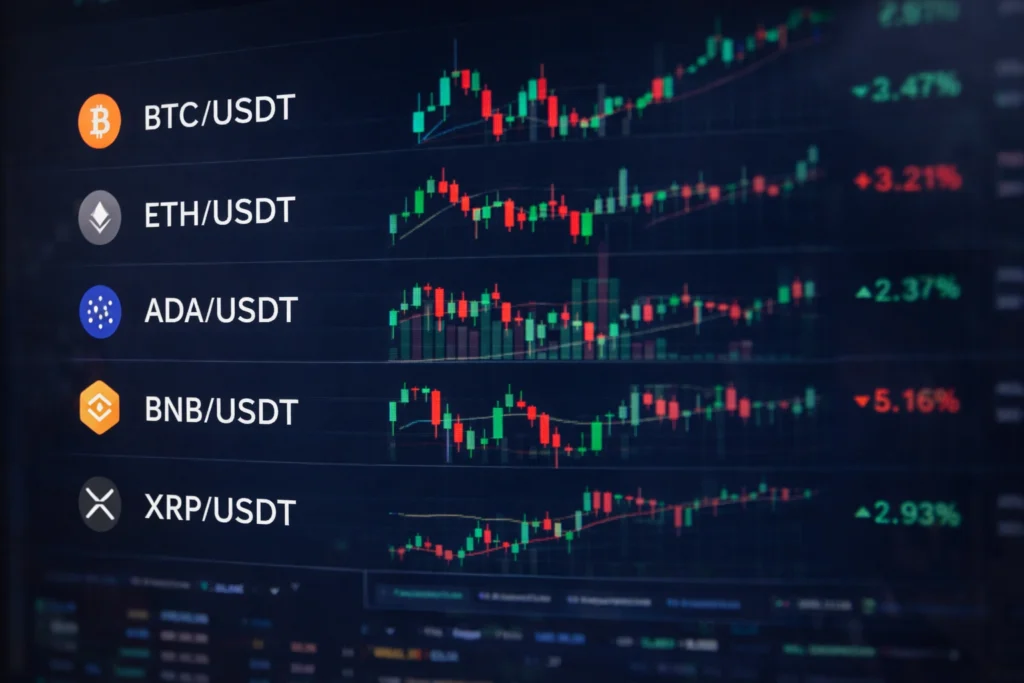
Most cryptocurrency exchanges both in India and globally leverage the cryptocurrency from Asia.
Rather than purchasing Bitcoins directly through the INR currency pair, the user can:
- Convert INR to USDT
- Use USDT to buy BTC, ETH, and/or other coins
This provides more flexibility and access to global markets.
2. Safe Haven During Market Falls
When markets crash, traders quickly convert their holdings into USDT to avoid losses. It’s like moving money into “digital cash.”
3. Cross-Border Transfers
USDT is widely used for sending money internationally. Many freelancers and businesses accept payments in USDT because:
- Transfers are instant
- Fees are low
- No bank delays
4. P2P Trading
Peer-to-peer crypto trading in India heavily relies on USDT. Buyers and sellers exchange INR and USDT directly using platforms like Binance P2P and Bybit.
is USDT Legal in India?
This is the big question.
It doesn’t ban the ownership or trading of USDT in India. cryptocurrency is not banned in India.
- crypto is not legal tender
- It is not regulated like banks or RBI-backed assets
- Profits from crypto are taxed
So, you can legally:
- Buy USDT
- Hold USDT
- Trade USDT
- Transfer USDT
But you must follow Indian tax laws.
Tax Rules for USDT in India
Since 2022, India has clear crypto tax rules:
- 30% tax on profits from crypto trading
- 1% TDS on every crypto transaction above the threshold
- No set-off of losses against other income
Even if you trade USDT:
- Converting USDT to another crypto = taxable event
- Selling USDT for INR at profit = taxable
This means USDT is treated just like any other crypto asset for taxation.
Is USDT Really “Safe”?
While USDT is supposed to be a stable coin, it is never risk-free.
The major concerns are:
1. Centralised Control
USDT is issued by a private company. It differs from Bitcoin in that it is not decentralized. Also, Tether can “freeze” wallets.
2. Reserve Transparency
Tether had previously attracted criticism regarding the question of whether Tether actually holds sufficient reserves to back the total US T coin issue. Now, Tether releases attestations frequently. There remains some skepticism about the true transparency.
3. Regulatory Risk
Stablecoins are under scrutiny by governments across the world. A major step by any government could possibly influence the process by which USDT works.
4. Platform Risk
If you store USDT on an exchange, that gets hacked, or goes out of business, you run the risk of losing your funds.
Despite these issues, USDT weathered a number of market crashes and continues to remain the backbone of global crypto trading.
USDT vs Other Stablecoins
| Stablecoin | Backing | Popularity in India | Risk Level |
|---|---|---|---|
| USDT | USD Reserves | Very High | Medium |
| USDC | USD Reserves | Growing | Low-Medium |
| DAI | Crypto-backed | Low | Higher |
| BUSD | USD Reserves (Binance) | Moderate | Medium |
USDT dominates because of its liquidity and universal acceptance.
How to Buy USDT in India
Indian users typically buy USDT in two ways:
Method 1: Through Indian Exchanges
Platforms like:
- CoinDCX
- WazirX
- ZebPay
Allow users to buy USDT using INR via UPI or bank transfer.
Method 2: P2P Platforms
On the P2P marketplaces:
- You pay INR to a seller
- Seller transfers USDT to your wallet
This method often offers better rates but requires caution and verification.
Best Practices for Indian Users
If you plan to use USDT:
- Use reputed exchanges only
- Enable 2-factor authentication
- Avoid storing large amounts on exchanges
- Use hardware or trusted wallets for long-term holding
- Keep records of all transactions for tax filing
Future of USDT in India
India is still determining its crypto regulations.The government is working on:
- A central bank digital currency (Digital Rupee)
- Clearer frameworks for crypto platforms
- Stronger compliance rules
USDT will likely continue playing a major role because:
- Traders need a stable digital asset
- Global crypto markets depend on it
- It simplifies cross-border value transfer
However, Indian users should stay alert to regulatory updates.
Final Verdict
It has been the backbone of the crypto ecosystem for Indian traders, as it offers stability in a highly volatile market, acting as the bridge between fiat money and digital assets.
But remember:
- USDT is not backed by RBI
- It is not risk-free
- It is subject to global regulatory changes
- Profits are heavily taxed in India
For Indian users, USDT is best used as:
- A trading tool
- A temporary store of value
- A bridge currency
Not as some kind of long-term “safe” investment, as with gold or fixed deposits.
Handle with care, use within the rules and regulations set forth, and never invest more than one can afford to lose.
Reviewed for accuracy and last updated on January 24, 2026.