


IndiGo, SpiceJet Shares Drop – Is Rising Fuel Pressure Back for Airline Stocks?
Shares of InterGlobe Aviation, parent of IndiGo, and SpiceJet fell by up to 5 percent after the government imposed a windfall tax on aviation turbine fuel exports. This has raised concerns about increasing fuel costs for the airline sector.
Despite a relatively stable market, airline stocks saw immediate selling pressure. This is a clear indicator of how sensitive airline stocks are to fuel-related policy changes.

Immediate Market Reaction
- Shares of IndiGo fell sharply in intraday trade.
- Shares of SpiceJet saw high volatility in terms of selling pressure.
- Aviation stocks saw underperformance in terms of market indices such as Nifty 50.
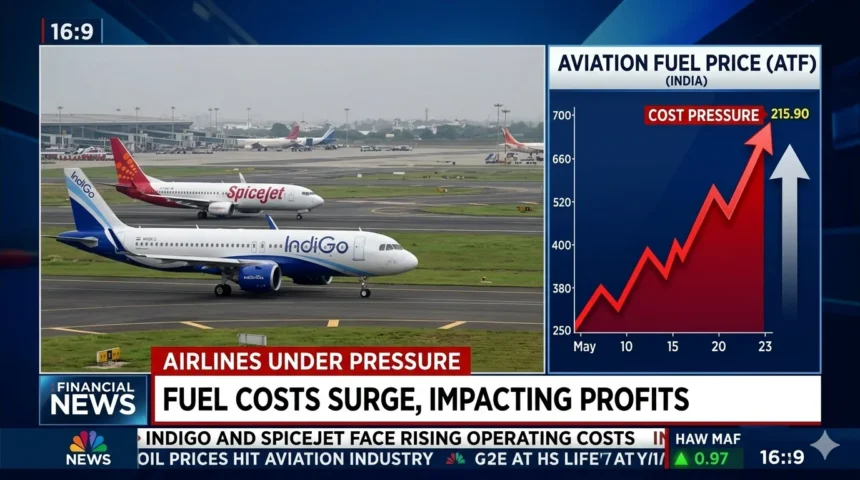
Fuel costs are one of the biggest cost drivers for airline companies, which usually account for 30 to 40 percent of total cost.
Why the Windfall Tax Matters
The reintroduction of windfall tax on ATF exports could:
- Increase the dynamics in the domestic fuel pricing scene.
- Impose a restriction on the flexibility of the oil refineries in pricing the oil.
- Indirectly sustain the high prices of ATF for the airlines.
The impact on the profitability of the aviation companies, which are already running on thin margins, could be substantial if the prices go up.
Supply–Demand Angle
The impact is multi-layered:
- Refiners → disincentive in export market.
- Fuel supply chain → pricing dynamics could change.
- Airlines → ATF prices could continue to stay high.
If ATF prices remain high, the airlines could face challenges in passing on the high costs to consumers in the form of ticket prices in a competitive market.
Analyst View
According to market experts, this is a negative sentiment trigger for the airline sector in the near future.
“Fuel cost volatility remains the biggest risk for aviation companies. Policy changes add another layer of uncertainty,” said the analyst.
The market usually tends to react immediately to this news, even before the actual impact on the companies’ costs starts reflecting in their quarterly results.
Broad Context
The aviation sector has seen a positive trend in the following areas:
- Passenger demand is robust.
- Capacity increase by the airlines.
- Load factors are high.
However, disruptions in the fuel sector continue to pose a headwind.
What Traders Should Watch
- Global crude oil price movements.
- ATF price movements in domestic markets.
- Adjustments in Airline ticket prices.
- Quarterly Margin Guidance issued by Airlines.
- Government stance on taxation of fuels going forward.
Is This A Bigger Signal For Markets?
Airline stocks are known to move significantly on cost-side risks. Among cost-side risks, fuel is perhaps the single-most critical factor.
The latest correction in Airline stocks is prompting this question:
Is this merely a short-term reaction, or is this the beginning of another phase of margin pressure for Airline stocks?
For now, traders are closely watching whether Airline stocks hold their ground… or continue to see more selling pressure.
Disclaimer:
This article is for information purposes only. It is not investment advice. Investments in the market are risky. Before making any financial decisions, it is recommended to consult a certified financial advisor.
Reviewed for accuracy and last updated on March 27, 2026.