


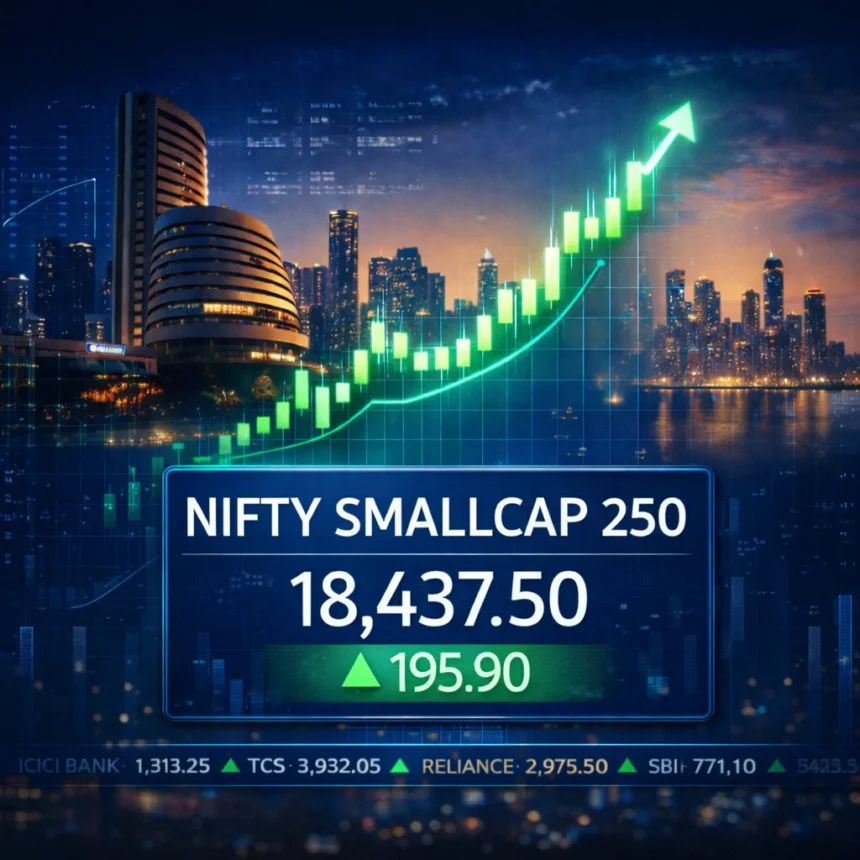
Nifty Smallcap 250 Index: A Guide to India’s Small-Cap Universe
The nifty smallcap 250 index is a favourite among investors who want exposure to India’s fast-growing small companies. While large caps offer stability and midcaps balance growth and risk, small caps bring the promise of high returns – along with higher volatility.
In this guide, we explain what the nifty smallcap 250 index is, how it works, what kind of stocks it includes, how it has performed, the risks involved, and how you can invest in it as part of a long-term strategy.

What Is the Nifty Smallcap 250 Index?
The nifty smallcap 250 index is maintained by NSE Indices and tracks the performance of 250 small-cap companies listed on the National Stock Exchange (NSE).
These companies are selected from the broader market after excluding large-cap and mid-cap stocks. In terms of market size, they rank below the Nifty Midcap universe but are among the most liquid and actively traded small-cap stocks.
Simply put, the nifty smallcap 250 index shows how India’s small-sized listed companies are performing.
Why Small Caps Matter in India’s Market
Small-cap companies are often at an early stage of growth. Many operate in niche areas, cater to new demand, or are expanding rapidly in domestic and export markets.
Investors track small caps because they offer:
- High growth potential
- Early exposure to future leaders
- Strong link to domestic economy
- Sharp rallies in bull markets
The nifty smallcap 250 index provides a broad picture of this dynamic space.
How Is the Nifty Smallcap 250 Index Constructed?
The index is built from eligible NSE-listed stocks based on:
- Free-float market capitalisation
- Liquidity and trading volume
- Inclusion in the small-cap segment
- Compliance with NSE rules
Like most NSE indices, it uses the free-float market cap method, meaning only shares available for public trading are considered.
This ensures the nifty smallcap 250 index reflects actual market activity and is suitable for index funds and ETFs.
What Kind of Companies Are in the Index?

The stocks in the nifty smallcap 250 index come from a wide mix of sectors such as:
- Chemicals & speciality materials
- Pharmaceuticals & healthcare
- Infrastructure & construction
- Engineering & capital goods
- Consumer goods & retail
- Textiles & manufacturing
- IT services & digital firms
- Auto ancillaries
These are typically smaller companies with ambitious growth plans.
Note: Constituents change over time as NSE reviews the index. Always check the NSE Indices website for the latest list.
How Often Is the Index Reviewed?
NSE Indices usually reviews the nifty smallcap 250 index twice a year. During these reviews:
- New fast-growing companies may be added
- Slower or less liquid stocks may be removed
- Weightages are adjusted
This keeps the index aligned with current leaders in the small-cap space.
Performance of Nifty Smallcap 250 Index Over Time
Historically, small-cap indices in India have shown:
- Strong gains in bull markets
- Deeper corrections during downturns
- Higher volatility than midcaps and large caps
The nifty smallcap 250 index has delivered impressive long-term returns during growth phases, but it has also seen sharp falls during market stress.
For investors, this means the journey can be bumpy, but rewarding over a long horizon.
Nifty Smallcap 250 Index vs Other Indices
To understand where it stands, compare it with midcap and large-cap indices:
| Index | Segment | Risk | Growth Potential |
|---|---|---|---|
| Nifty 50 | Large-cap | Low | Moderate |
| Nifty Midcap 150 | Mid-cap | Medium | High |
| Nifty Smallcap 250 Index | Small-cap | High | Very high |
Each serves a different role in a portfolio.
For a more focused small-cap basket, you can also look at Small Cap Nifty 50
Why Investors Track the Nifty Smallcap 250 Index
The nifty smallcap 250 index attracts investors because:
- It covers a wide universe of small caps
- Offers diversification within small caps
- Captures early growth trends
- Reflects grassroots economic momentum
It’s often seen as a barometer of risk appetite in the market.
Risks of Investing in Nifty Smallcap 250 Index
Small caps come with higher risks:
- Sharp price swings
- Lower liquidity in some stocks
- Higher impact of negative news
- Business risks due to smaller scale
- Emotional reactions during volatility
That’s why small-cap exposure should be balanced with more stable assets.
Who Should Invest in the Nifty Smallcap 250 Index?

Long-term investor considering Nifty smallcap 250 index
This index suits investors who:
- Have a long-term horizon (7–10 years)
- Can handle high volatility
- Want aggressive growth potential
- Already hold large and midcap funds
- Prefer SIP investing for discipline
If you need short-term safety, small caps may not be suitable.
How Can You Invest in Nifty Smallcap 250 Index?
You can’t buy the index directly, but you can invest through:
- Index mutual funds tracking the index
- ETFs based on the nifty smallcap 250 index
- Some PMS or structured products
Index funds and ETFs are the easiest options for retail investors.
SIP vs Lump Sum in Small-Cap Indices
Because of volatility, many experts suggest using SIP (Systematic Investment Plan) for small-cap index funds.
SIP Benefits:
- Averages purchase cost
- Reduces timing risk
- Builds discipline
Lump sum may work during deep corrections, but SIP is safer for most.
Taxation on Nifty Smallcap 250 Index Funds
Equity funds tracking the index follow standard equity tax rules in India:
- Holding < 1 year: 15% STCG tax
- Holding > 1 year: 10% LTCG above ₹1 lakh
Always check current tax rules or consult a tax expert.
How the Index Fits Into a Portfolio
A diversified portfolio may look like:
- Large caps for stability
- Midcaps for growth
- Small caps for high returns
For midcap exposure, you can also explore Nifty Midcap 150 to balance risk and reward.
Small caps should usually form a smaller portion due to higher risk.
Common Myths About Small Caps
(X) Small caps always give high returns
(_/) Returns depend on market cycles.
(X) Small caps are unsafe
(_/) They’re risky, not unsafe if diversified.
(X) Small caps are only for experts
(_/) SIPs make them accessible to all.
Things to Check Before Investing
Before investing in nifty smallcap 250 index funds, check:
- Expense ratio
- Tracking error
- Fund house credibility
- Your asset allocation
- Time horizon
Don’t chase past returns blindly.
Final Thoughts on Nifty Smallcap 250 Index
The nifty smallcap 250 index opens the door to India’s most dynamic and fast-growing companies. It offers a broad view of the small-cap universe and a structured way to invest without picking individual stocks.
While volatility can test patience, investors who stay disciplined, invest regularly, and keep a long-term view can benefit from the strong wealth-creation potential of the nifty smallcap 250 index.
For those who believe in India’s grassroots growth story, this index deserves a place on the watchlist.
Reviewed for accuracy and last updated on December 26, 2025.