




Mutual Funds Explained for First-Time Investors
Mutual Funds are one of the simplest ways for Indians to begin investing. Rather than choosing stocks yourself, you can combine your investments with those of other people, and a professional fund manager will handle the investments on your behalf. Why is this important? Because most new investors lack the time and knowledge to monitor the market on a daily basis. Mutual Funds provide diversification, professional management, and flexibility-even with small investments. In the year 2026, with increasing inflation and job insecurity, learning about mutual funds will enable you to watch your investments grow steadily without worrying.
How This Guide Helps New Investors
This guide is intended for first-time investors in India who are interested in learning about mutual funds, how they work, and how to begin investing in them. This guide is intended to be educational in nature and is not meant to promote any particular mutual fund.

What Is a Mutual Fund?
A mutual fund collects money from many investors and invests it in:
- Stocks
- Bonds
- Gold
- Or a mix of assets
Each investor owns “units” of the fund. The value of these units changes daily based on the market. This value is called NAV (Net Asset Value).
You don’t buy shares of companies directly. You buy units of a fund that owns many assets.
This spreads risk and reduces dependency on a single stock.
Why Mutual Funds Suit Beginners
For first-time investors, mutual funds offer:

- Professional management
- Diversification across many companies
- Low entry amount (₹500 SIPs)
- Easy tracking via apps
- Better long-term potential than FDs
You don’t need to be a market expert. You just need consistency.
Types of Mutual Funds You Should Know
| Type | Invests In | Best For |
|---|---|---|
| Equity Funds | Shares of companies | Long-term growth |
| Debt Funds | Bonds & fixed income | Stability |
| Hybrid Funds | Mix of equity & debt | Balanced approach |
| Index Funds | Market index (Nifty) | Low-cost investing |
| Liquid Funds | Short-term debt | Parking cash |
Beginners usually start with index funds, large-cap funds, or balanced funds.
SIP vs Lump Sum: What’s Better?
“A SIP is simply a way to invest in mutual funds regularly; the fund itself remains the same.”
You can invest in two ways:
- SIP (Systematic Investment Plan): Small amount every month
- Lump Sum: One-time big investment
SIP is preferred for beginners because:
- It reduces market timing risk
- Fits monthly income
- Builds discipline
- Smoothens volatility
Learn the basics in our guide: SIP Explained Simply: How Monthly Investing Works.
“Start your first SIP in just ₹500. No paperwork.”
How Much Should You Invest?
A simple rule:
- Start with 10-20% of monthly income
- Begin small and increase yearly
- Don’t invest money you need within 1-2 years
Example:
Salary ₹30,000 -> SIP ₹2,000-₹3,000 is a good start.
Returns: What Can You Expect?
Mutual funds don’t guarantee returns. But historically:
- Equity funds: 10-12% long-term
- Hybrid funds: 8-10%
- Debt funds: 5-7%
Returns vary year to year. The key is time in the market, not timing the market.
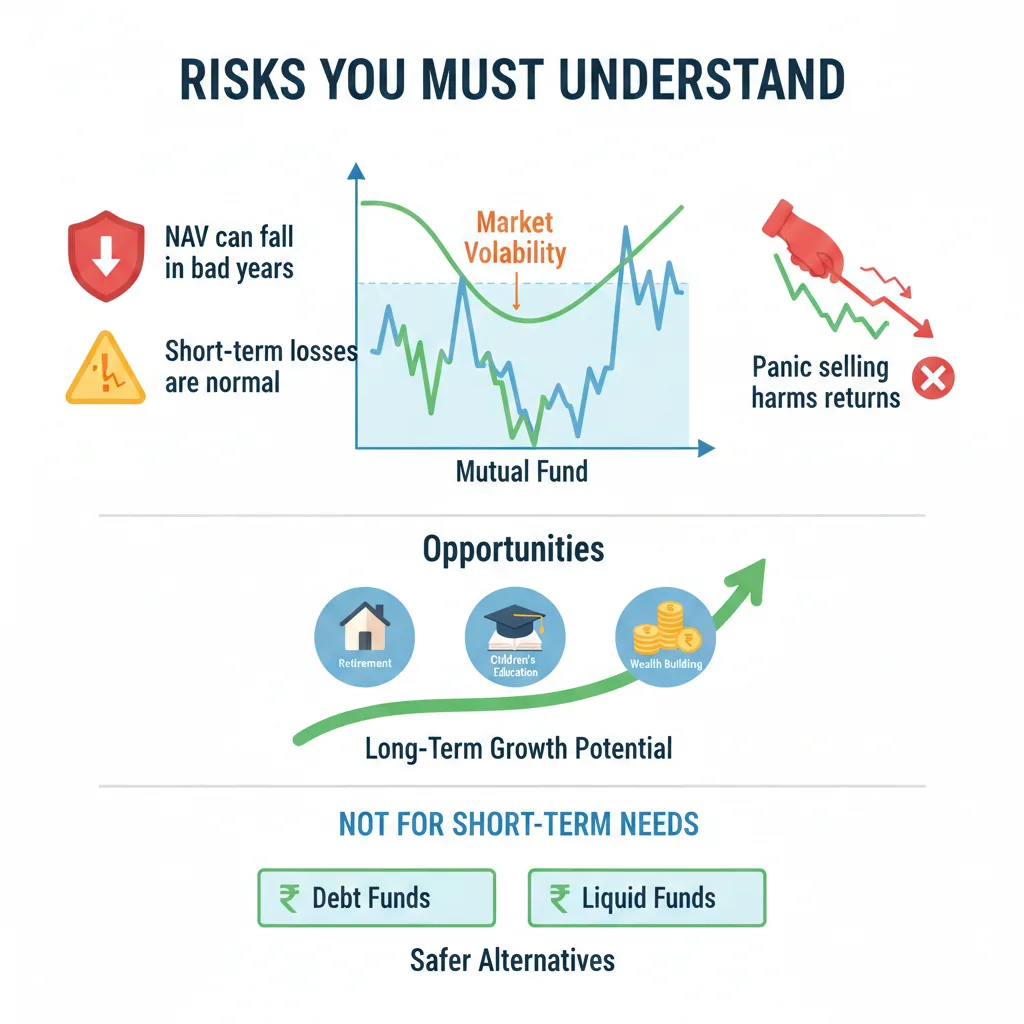
Risks You Must Understand
Mutual funds carry market risk:
- NAV can fall in bad years
- Short-term losses are normal
- Panic selling harms returns
That’s why equity funds are for long-term goals like:
- Retirement
- Children’s education
- Wealth building
For short-term needs, choose debt or liquid funds.
How to Start Investing in India
You can invest via:
- Mutual fund apps (Groww, Coin, Paytm Money)
- AMC websites
- Banks or agents
Steps:
- Complete KYC
- Choose a fund
- Select SIP or lump sum
- Link bank account
- Confirm
Your investment runs automatically.
Common Mistakes First-Time Investors Make
- Chasing last year’s best returns
- Stopping SIP during market falls
- Investing without goals
- Too many funds
- Expecting quick profits
Mutual funds reward patience, not impatience.
Why Mutual Funds Matter for Indians in 2026
- FDs struggle to beat inflation
- Salaries grow slowly
- Living costs rise fast
Mutual funds help your money grow with the economy. They’re not shortcuts-but they’re reliable long-term tools.
What Regulators Say
SEBI advises investors to understand product risk, read scheme documents, and avoid guaranteed-return claims.
Official investor guidance: https://www.sebi.gov.in/
Conclusion
Mutual funds make investing simple, affordable, and accessible. You don’t need market expertise or large capital-just clarity and consistency.
Start small. Stay regular. Let time work.
Your future self will thank you.
Written By Nakul
Disclaimer:
This article is for informational purposes only and does not constitute financial advice. Mutual fund investments are subject to market risks. Readers should read all scheme-related documents carefully and consult a registered financial advisor before investing.
Reviewed for accuracy and last updated on January 31, 2026.