


How to Analyse IPO — A Complete Guide for Investors
Every investor thinks of investing in an IPO. But before investing in an IPO, one must know how to analyse IPO. Investments made based on hype, social media talk, and oversubscription are risky. So in this guide, let’s learn how to analyse an IPO? What factors to look for? What to avoid? What to think about Sale/Exit after allotment.

Which IPO should I apply for? How to identify it?
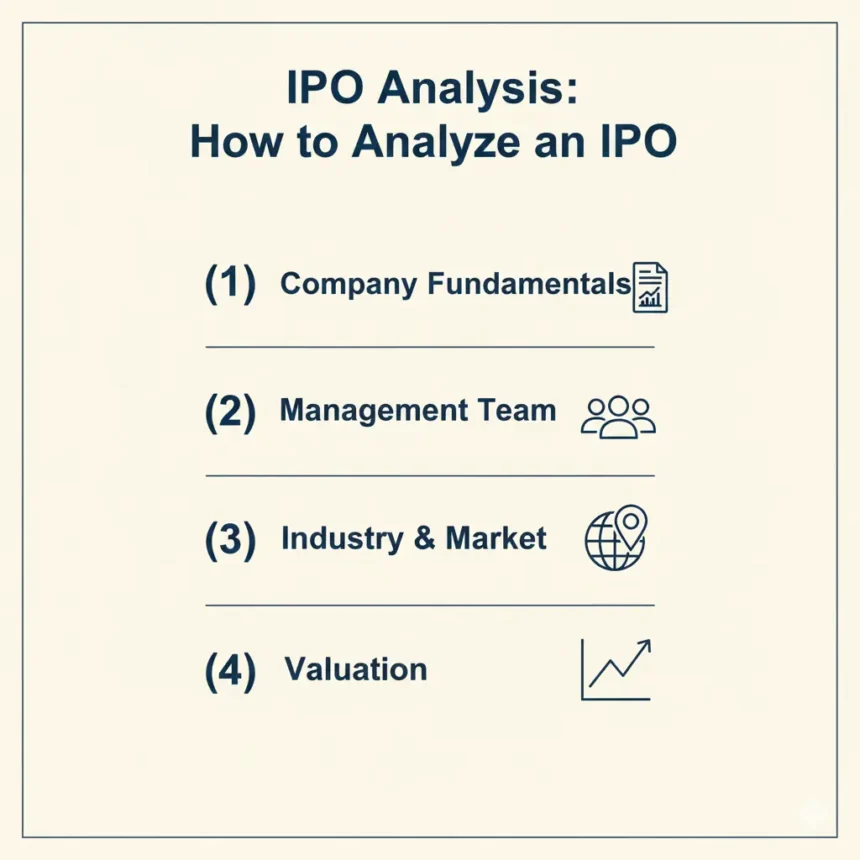
Market conditions & industry trends should be considered
IPOs give good listings when the market is good. Also, is the sector in which the company operates in a growth mode? It is very important.

DRHP/Prospectus should be read completely
Company business model, risks, financial data, use of IPO funds — all this is included.It is better if the fund is used for development and expansion. Be careful if it is used only to pay off debts.
Management & Promoter Quality
Experience, brand reputation, high promoter stake even after IPO — create confidence.
How to value IPO prices? Financial & Valuation Metrics
P/E, P/B ratios, profits and debt level
Compare with other listed companies. Are profits steady? Is debt low? Is cash flow positive? It is worth looking into.
Future growth clarity
Don’t just go by low price / hype. The company should have a clear growth plan.
Mistakes to avoid before applying for an IPO
Don’t believe in hype & oversubscription
Oversubscription does not mean high price on the day of listing. Volatility is high.
Don’t invest without reading the prospectus
If you invest based on brand name, there are more chances of mistakes. You should read the risk factors.
Don’t bet like gambling
You need an investment that suits your risk tolerance & financial goal.
Can I exit on the Listing Day after IPO Allotment?
Yes! But not every time
If you see a profit, you can sell on the Launch Day itself. But there is a risk of losing long-term growth.
Things to consider before exit
✔ Has the listing premium increased? ✔ Are there lock-in periods? ✔ What is your investment objective?
Conclusion — Invest in IPOs with a plan
✔ Invest only when fundamentals are strong. ✔ Don’t believe in market hype. ✔ Peer compare valuations & financials. ✔ Exit decisions should be based on your strategy.
Learning How to Analyse IPO —
👉 Filter out the hype and only capture good opportunities.
5 Sample IPO Analysis Checklists (in Telugu)
Checklist 1: Company Fundamentals
Why is it important to consider?
Company business model is clear, risk is low. Sector growth trend A sector with growth = future profit. Market share & competition Is the company strong in the competition? Expansion is better than paying off debt to use IPO funds. High promoter holding increases confidence.
Checklist 2: Financials & Valuation
What to consider
Are revenue and profit growth increasing steadily? Are net margins stable/improving? Debt level, cash flow Debt low, cash flow positive? P/E, P/B, EV/EBITDA reasonable compared to peers? ROE & ROCE good return on investment?
Checklist 3: Risk & Governance
Why it matters
Risk factors in DRHP Future problems are known in advance. Promoter dilution High dilution = doubt. Management experience Good leadership = strong growth. Underwriter trust is good if they are transparent. Legal issues Cases/enquiries are a sign of caution.
Checklist 4: Market & Timing
Why it matters
Market sentiment Listing returns are better in a bull market. Sector outlook Sector details affect the company. Subscription demand but don’t believe hype alone. Issue Size & Structure is too big but volume is affected. Peer valuation compare You shouldn’t overpay.
Checklist 5: Your investment strategy
How to consider the decision?
Investment horizon short-term or long-term? Risk tolerance Risk is high in IPO. Exit plan Listing gains vs future growth. Will there be lock-in? If supply increases, price may fall. Quarterly tracking plan should be followed after listing.
Conclusion
💡 Investing in IPO Opportunity + Risk. 👉 Checklists = Better decisions. 👉 Analysis = Better wealth creation.
Reviewed for accuracy and last updated on December 1, 2025.