


South Korea Market Shock – Biggest Selloff Since 2008 Sparks Global Concern
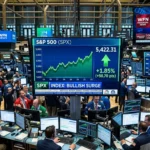
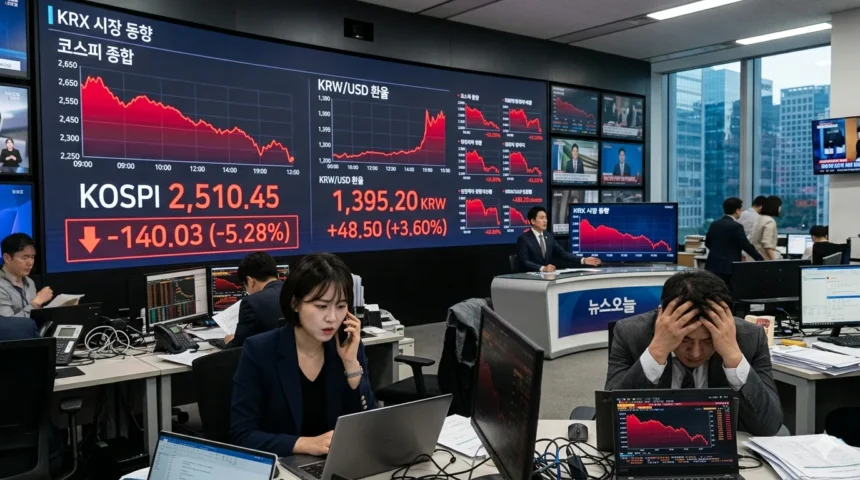
The South Korean financial markets are facing a major crisis, and the stock market is experiencing its biggest selloff since 2008. The South Korean currency, also known as the won, is also experiencing a sharp decline against the US dollar.
The sharp decline in the South Korean stock market and the won against the dollar have positioned South Korea at the center of a risk-off sentiment that is rising globally among emerging markets.

Immediate Market Reaction
- Sharp decline in KOSPI Index over a period of days.
- Sharp decline of Korean won against US dollar.
- High volatility in global markets.
When the stock market and the currency are falling simultaneously, it is a clear case of risk aversion.
What’s Driving the Sell-Off?
A number of factors appear to be at play, and they include:
- Foreign institutional selling in emerging markets.
- Decline in global demand.
- Currency issues, given the strength of the US dollar.
- Global geopolitical and macro-economic uncertainties.
The South Korean economy, being an export-based economy, is particularly vulnerable to a slowdown in the global economy.
Supply-Demand Perspective
The above market dynamics indicate a stressful scenario, where:
- Equity selling leads to a decrease in demand for stocks.
- Capital outflow puts pressure on the currency.
- Strength in the dollar will exacerbate emerging markets.
This forms a vicious circle where selling leads to more selling in other markets.
Analyst View
Experts believe that what is happening in South Korea is part of a larger global trend.
“Emerging markets are reacting to global liquidity shifts and risk-off sentiment. South Korea is one of the most sensitive given its export exposure,” a global strategist was quoted as saying.
During a period of uncertainty, markets tend to test the weakest links.
Broader Context
The last time there was a selloff of this nature, it was in 2008, during the global financial crisis.
The South Korean economy is closely linked to:
- Semiconductor Exports.
- Global Trade Cycles.
- Currency Stability.
Any disruption in these areas will quickly reflect in the market.
What Traders Should Watch
- Korean Won movement vs Dollar.
- Continued FII selling.
- Global risk sentiment and US market cues.
- Semiconductor sector movement.
- Central Bank intervention signals.
Bigger Signal for Markets?
Sharp selloffs in key Asian markets are always a significant event, and this time is no different.
The big question on everyone’s minds is:
Is this a blip, or are there bigger signals for global markets?
For traders, these events are always a precursor to what is to come.
Because, let’s face reality, when both stocks and currencies are moving in a similar manner, it’s not volatility, it’s a movement of capital, and in global markets, this is where the big trade is made.
Disclaimer:
The information contained in this article is for general information purposes only and is not intended to be investment advice. The global market is prone to risks and fluctuations. Therefore, readers are advised to consult certified financial advisors before taking any financial decision.
Reviewed for accuracy and last updated on March 31, 2026.