



F and O Trading: A Beginner’s Guide to Derivatives
F and O trading has become one of the most talked-about segments in the Indian stock market. From full-time traders to beginners exploring derivatives, more people are turning to futures and options to profit from market movements with limited capital.
In this guide, we explain what F and O trading is, how it works, why traders use it, its risks, common strategies, and how beginners can start safely.

What Is F and O Trading?
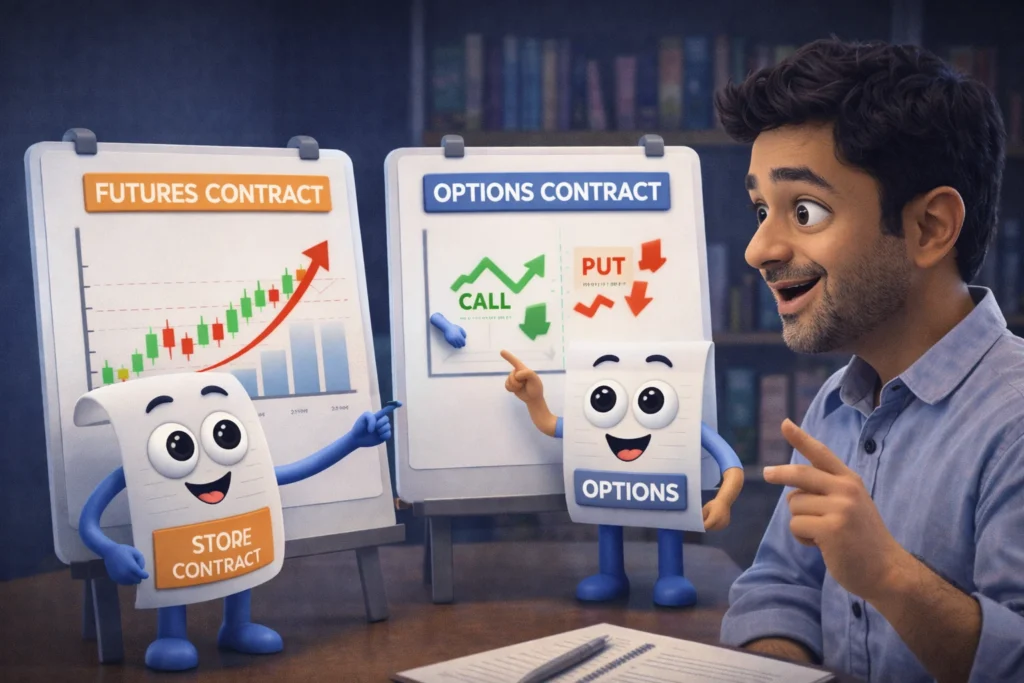
F and O trading stands for Futures and Options trading, a type of derivatives trading where contracts derive their value from an underlying asset such as stocks, indices (like Nifty and Sensex), or commodities.
In simple words:
- You don’t buy the actual share
- You trade a contract based on its future price
- Profits or losses depend on price movement
Futures
An agreement to buy or sell an asset at a fixed price on a future date.
Options
A contract that gives you the right, but not the obligation, to buy or sell at a fixed price before expiry.
Why Is F and O Trading So Popular in India?
The popularity of f and o trading is driven by:
- Lower capital via margin trading
- Ability to profit in rising or falling markets
- High liquidity in index contracts
- Fast returns compared to delivery trading
- Hedging against portfolio risk
With platforms becoming easier to use, derivatives are attracting more retail traders.
How Does F and O Trading Work?
Here’s how it typically works:
1️⃣ Choose the underlying stock or index
2️⃣ Select expiry date
3️⃣ Pick futures or options contract
4️⃣ Enter trade with margin
5️⃣ Square off or let it expire
Contracts have:
- Fixed lot size
- Expiry date (weekly/monthly)
- Daily mark-to-market settlement
Prices change based on demand, supply, and market expectations.
Where Is F and O Trading Done in India?
In India, f and o trading happens mainly on:
- NSE (National Stock Exchange)
- BSE (Bombay Stock Exchange – limited contracts)
Most liquidity is in:
- Nifty 50 options
- Bank Nifty options
- Select stock futures & options
Difference Between Futures and Options
| Feature | Futures | Options |
|---|---|---|
| Obligation | Must buy/sell | Right, not obligation |
| Risk | Unlimited | Limited for buyers |
| Cost | Margin required | Premium paid |
| Profit | Unlimited | Unlimited for buyers |
| Complexity | Medium | High |
Options offer flexibility but are more complex.
Who Should Try F and O Trading?
F and O trading suits:
* Active traders
* Those who can monitor markets
* People who understand risk
* Traders with discipline
It may not suit:
* Long-term investors
* People seeking guaranteed income
* Beginners without training
* Those with low risk tolerance
Common Strategies in F and O Trading
Some popular strategies include:
For Futures:
- Trend following
- Breakout trading
- Hedging positions
For Options:
- Buying calls/puts for momentum
- Selling options for premium
- Spreads, straddles, strangles
If you’re new to options, an options trading course can help you understand strategies and risks before you trade with real money.
Risks Involved in F and O Trading
F&O trading is risky. Major risks include:
High leverage magnifies losses
Options time decay eats premium
Sudden market moves cause big losses
Margin calls in futures
Emotional stress and overtrading
Many beginners lose money because they underestimate these risks.
How Much Capital Is Needed for F and O Trading?
Capital depends on:
- Instrument (Nifty, stocks)
- Strategy (buying vs selling)
- Broker margin rules
Rough idea:
- Option buying: ₹20,000-₹50,000+
- Option selling: ₹1-3 lakh+
- Futures: ₹1-2 lakh+
Always trade with money you can afford to lose.
Using Paper Trading Before Going Live
Before risking money, practise first.
A paper trading app in India lets you simulate F&O trades at live prices without financial risk.
This helps you understand margin, lot size, and volatility.
F and O Trading and Algo Trading
Automation is becoming popular in derivatives.
Traders now use algo trading to automate F&O strategies, manage multiple positions, and react faster to market moves.
But algos still need good logic and strict risk control.
Commodity F&O and MCX Timing
Apart from stocks, derivatives are traded in commodities too.
If you explore commodity futures and options, knowing MCX trading time is essential to trade during high liquidity hours.
Commodity F&O follows different timings than equity markets.
Key Tips for Beginners in F and O Trading
* Start with index options, not stocks
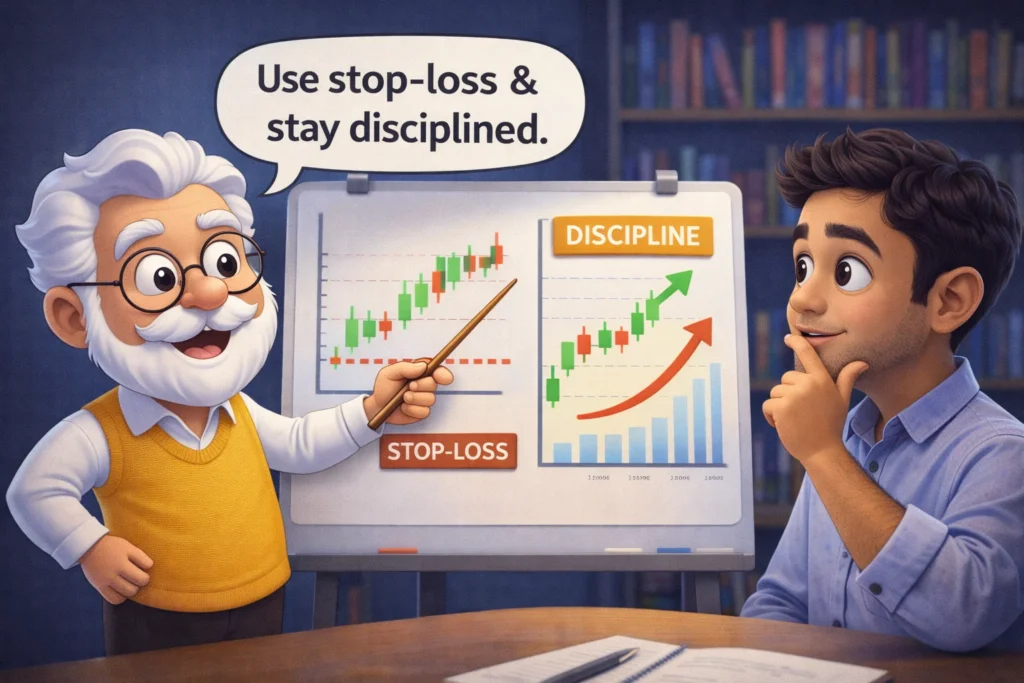
* Use strict stop-loss
* Risk small per trade
* Avoid overnight positions initially
* Don’t chase daily profit targets
* Keep a trading journal
* Learn continuously
Discipline beats excitement.
Taxes and Charges on F&O Trading
In India:
- F&O profits are treated as business income
- Losses can be carried forward as per rules
- Brokerage, GST, STT, charges reduce net profit
Consult a tax advisor for proper filing.
Can You Make Consistent Money from F&O Trading?
Some traders do – but many don’t.
Consistency needs:
- Strong strategy
- Risk management
- Emotional control
- Experience
- Patience
There are no shortcuts.
Common Myths About F and O Trading
❌ It’s easy money
✔️ It’s skill-based and tough
❌ You need big capital
✔️ You need good risk control
❌ Tips guarantee profits
✔️ Tips often mislead
Future of F and O Trading in India
With:
- Growing retail participation
- Weekly expiries
- Better trading tools
- Education access
F and O trading is likely to remain a major segment in Indian markets. But regulation and awareness are also increasing to protect investors.
Final Thoughts: Is F and O Trading Right for You?
So, what is f and o trading really about?
It offers:
- Big opportunities
- High flexibility
- But also high risk
For those willing to learn, practise, and respect risk, it can be a powerful trading tool. For others, long-term investing may be safer.
Know yourself before you trade.F and O Trading: How to Profit From Derivatives
Reviewed for accuracy and last updated on December 28, 2025.