


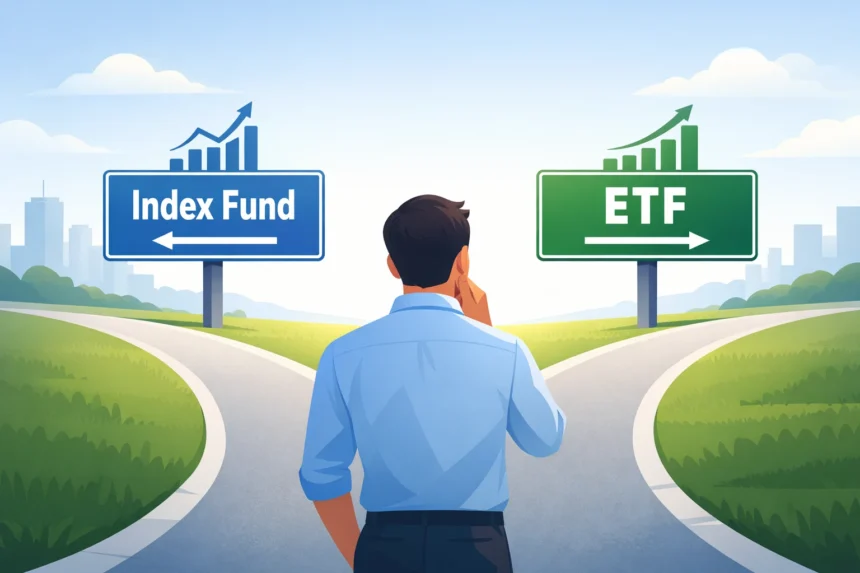
Index Funds vs ETFs: What’s the Difference?
If you’re new to investing, you’ve probably heard two names over and over: index funds and ETFs. They’re often praised as simple, low-cost ways to build wealth. But what’s the real difference-and does it even matter?
Both index funds and ETFs let you invest in hundreds of companies at once. They’re designed to track the market instead of trying to beat it. For most Americans, these two tools form the backbone of long-term investing.

Yet they work slightly differently, and those differences can shape how flexible, affordable, and convenient your investments become. Understanding them now can save you money-and stress-over decades.
How This Guide Helps Investors
This guide will walk you through the differences in structure between index funds and ETFs, including how they are traded, how expenses and taxes apply, and which one might be better suited for your investing strategy. This guide is for educational purposes only and is not intended to promote any investment product.
What Is an Index Fund?
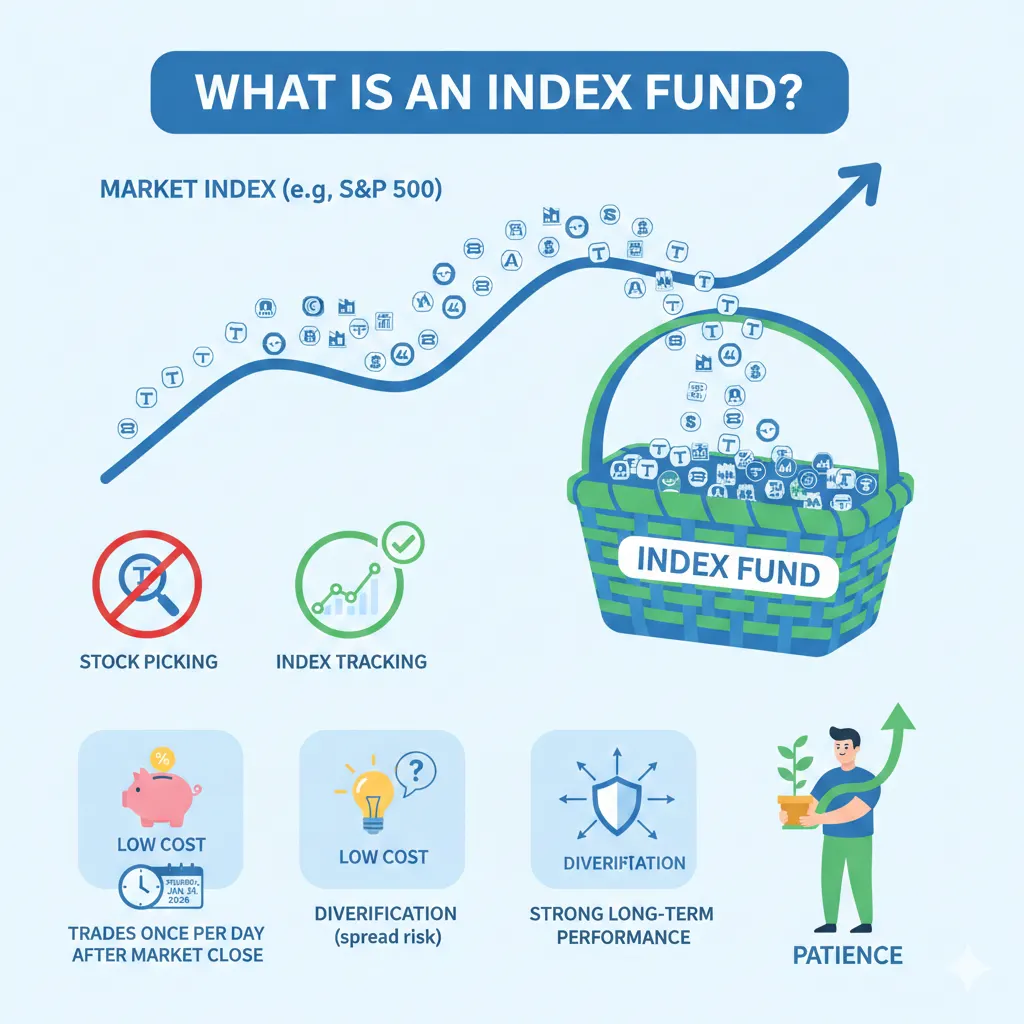
An index fund is a type of mutual fund designed to track a market index, such as the S&P 500.
Instead of picking stocks, the fund simply mirrors the index. If the index holds 500 companies, the fund holds those same companies in the same proportions.
Index funds are popular because they:
- Are low-cost
- Are easy to understand
- Spread risk across many companies
- Perform competitively over time
You usually buy index funds directly through a fund company or brokerage. Transactions happen once per day, after the market closes.
They’re built for long-term investors who don’t want to trade frequently.
What is an ETF and how it works
What Is an ETF?
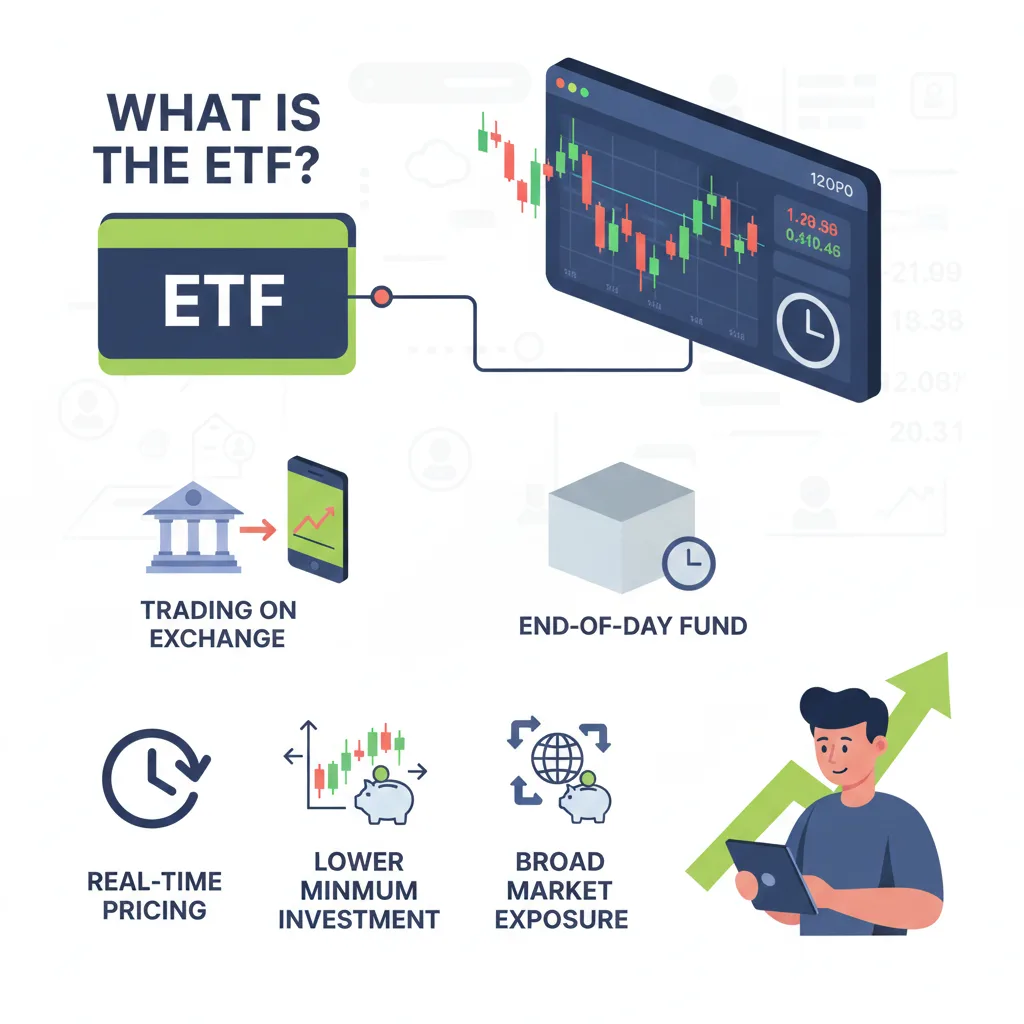
An ETF, or Exchange-Traded Fund, is also designed to track an index or group of assets.
The big difference is how you buy it.
ETFs trade on the stock market just like shares of Apple or Tesla. You can buy or sell them anytime during market hours. Prices change throughout the day.
ETFs offer:
- Real-time pricing
- Intraday trading
- Lower minimum investment
- Broad market exposure
Many ETFs track the same indexes as index funds. For example, you can buy an S&P 500 index fund or an S&P 500 ETF.
The goal is the same. The wrapper is different.
“This article focuses on how ETFs differ from index mutual funds; for long-term ETF portfolio selection, investors should evaluate funds separately based on goals and risk tolerance.”
The Key Differences at a Glance
| Feature | Index Fund | ETF |
|---|---|---|
| How you buy | Through fund company | On stock exchange |
| Trading | Once per day | All day |
| Minimums | Often $500-$3,000 | Price of one share |
| Price changes | End of day | Real-time |
| Best for | Long-term savers | Flexible investors |
Both are built on the same idea: track the market cheaply.
The difference is how hands-on you want to be.
Costs: Where They Really Differ
Both index funds and ETFs are known for low fees. Expense ratios often range from 0.03% to 0.20%.
But there are hidden differences:
- Index funds may require higher minimum investments
- ETFs may involve trading spreads
- Some brokers charge trading fees (less common today)
Over decades, even small cost differences matter.
That’s why low-cost options from providers like Vanguard, Fidelity, and Schwab dominate this space.
How Taxes Work
ETFs have a structural advantage.
Because of how they’re built, ETFs are often more tax-efficient. They generate fewer taxable events inside the fund.
Index mutual funds can distribute capital gains, creating tax bills even if you didn’t sell anything.
In tax-advantaged accounts like IRAs or 401(k)s, this difference doesn’t matter. In taxable brokerage accounts, it can.
Flexibility and Control
ETFs behave like stocks.
You can:
- Buy at any time during the day
- Use limit orders
- Sell instantly
Index funds are slower and simpler. You place an order, and it executes after the market closes.
For long-term investors, that delay rarely matters. But for people who want control over timing, ETFs feel more natural.
Which One Is Better for Beginners?
For most beginners, both are excellent.
Choose an index fund if you:
- Prefer simplicity
- Invest automatically
- Use retirement accounts
- Don’t care about intraday prices
Choose an ETF if you:
- Want flexibility
- Invest in a brokerage account
- Start with small amounts
- Prefer stock-like behavior
In practice, many investors use both.
Real-World Example
You want to invest in the S&P 500.
Option 1:
- Buy an S&P 500 index mutual fund
- Invest $3,000 minimum
- Trades once per day
Option 2:
- Buy an S&P 500 ETF
- Invest $50
- Trades instantly
Both track the same companies. Both rise and fall together.
The difference is access and timing.
Why Both Beat Picking Stocks
Most professional investors fail to beat the market long term.
Index-based investing wins because it:
- Reduces risk
- Cuts costs
- Removes emotion
- Tracks overall economic growth
This approach is backed by decades of data.
According to the U.S. Securities and Exchange Commission, diversified funds help reduce risk compared to owning individual stocks.
https://www.sec.gov/investor/pubs/inwsmf.htm
That’s why index funds and ETFs dominate retirement accounts across the U.S.
Common Myths
“ETFs are riskier.”
They often hold the same assets as index funds.
“Index funds are outdated.”
They remain core holdings for millions.
“One is always better.”
The best choice depends on your habits.
Conclusion
Index funds and ETFs aren’t rivals. They’re tools built on the same idea: grow with the market instead of fighting it.
Index funds offer calm, automatic investing.
ETFs offer flexibility and low barriers to entry.
Both can build wealth over time. The right choice isn’t about which is “better.” It’s about which fits your style-and helps you stay invested for the long run.
Written By Nakul:
Disclaimer
This article is for informational purposes only and does not constitute financial advice. Investment products involve risk, including possible loss of principal. Always review fund details and consult a qualified financial professional before making investment decisions. Information is accurate to the best of our knowledge at the time of publication and may change.
Reviewed for accuracy and last updated on January 31, 2026.