



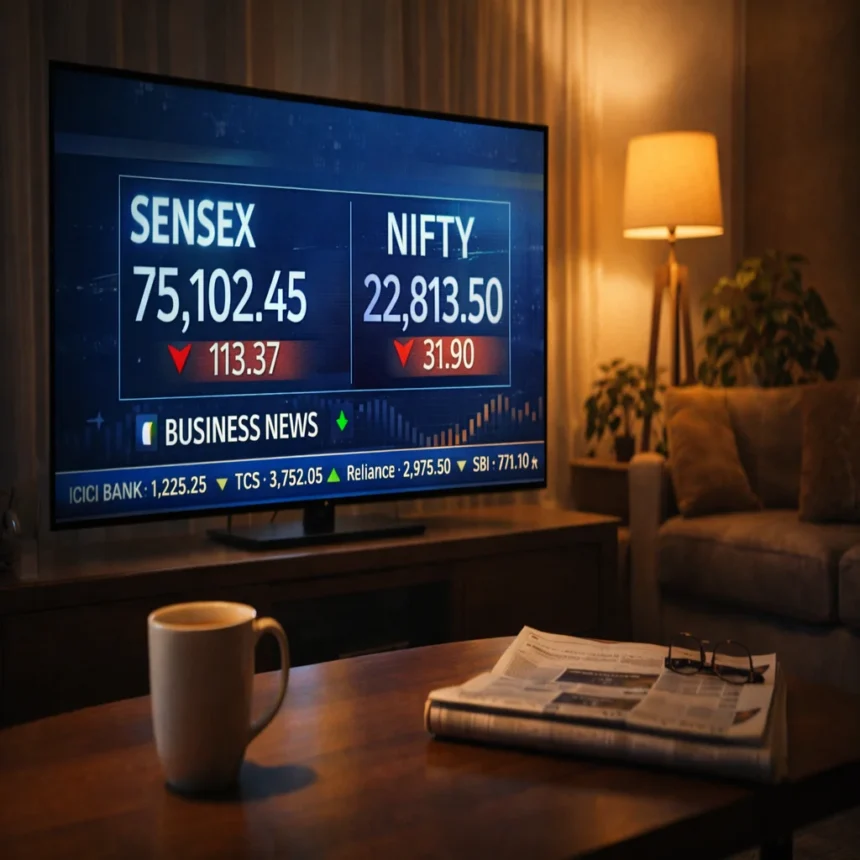
Sensex vs Nifty: Same Market, Two Views
Every evening, when stock market numbers flash across TV screens, two names dominate the ticker – Sensex and Nifty. One might close at a record high, the other just a few points behind. For many people, they look like twins. But are they really the same?
Not quite.

Both track the Indian stock market, but they come from different exchanges and look at the market through slightly different lenses.
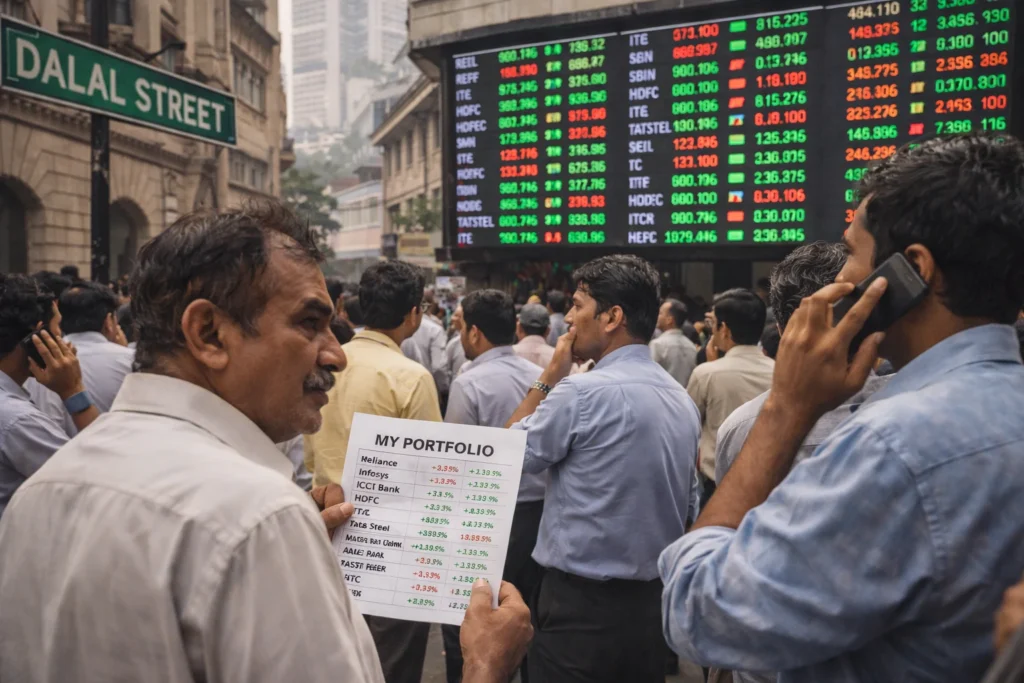
Two Indices, One Market Story
At heart, both Sensex and Nifty try to answer one simple question: How is the stock market doing today?
If investors are buying, they go up.
If there’s fear in the air, they slide.
That’s why they usually move together. The mood of Dalal Street drives both.
Still, the way they’re built makes them different.
Where Sensex Comes From
Sensex belongs to the Bombay Stock Exchange, better known as the BSE. It’s Asia’s oldest stock exchange and has been around since the 1800s. The Sensex itself was launched in 1986.
It tracks 30 big companies listed on the BSE. These are household names – large banks, IT giants, consumer brands, and industrial leaders. The idea is simple: follow the biggest players, and you’ll get a fair sense of how the market is moving.
Because it’s been around for decades, Sensex has become the most quoted number in market headlines.
What Makes Nifty Different
Nifty is the benchmark index of the National Stock Exchange, or NSE. It came into being in 1996, when the NSE started operations.
Unlike Sensex, Nifty tracks 50 companies. With more stocks in its basket, it tries to give a wider snapshot of the market. These 50 firms also come from different sectors – finance, IT, autos, metals, pharma, telecom, and more.
So while Sensex is more compact, Nifty spreads its net a bit wider.
The Exchange Matters
One big difference is the platform behind them.
Sensex reflects prices from trades on the BSE.
Nifty mirrors what’s happening on the NSE.
Today, the NSE handles a larger share of daily trading in India. That’s one reason many active traders pay closer attention to Nifty. But in terms of reputation and history, Sensex still holds a special place.
Both exchanges are regulated by SEBI, so from an investor’s point of view, safety and rules are the same.
Why They Rise and Fall Together
Most days, you’ll notice Sensex and Nifty moving almost in sync. There’s a good reason for that.
Many heavyweight stocks – like large banks, IT majors, and energy companies – are part of both indices. When these giants move, both Sensex and Nifty feel the impact.
Add to that big news events – interest rate decisions, global market cues, oil prices, elections – and you get similar reactions across the board.
So even though their baskets are different, their direction is often the same.
How The Numbers Are Calculated
Both indices use what’s called the free-float market capitalisation method. In everyday language, this means:
- Bigger companies matter more.
- Only shares available for public trading are counted.
So if a massive stock jumps or falls sharply, it can pull the index with it. That’s true for both Sensex and Nifty.
Sensex or Nifty: Which Should You Follow?
This is where many newcomers get confused.
The truth is, you don’t really have to choose.
Sensex gives you a tight view of 30 top companies.
Nifty gives you a slightly broader view with 50 stocks.
Over long periods, their returns have been very similar. Both reflect the same economy, the same corporate growth, and the same market cycles.
If you understand one, you pretty much understand the other.
For Investors, Does It Matter?
If you’re investing through index funds or ETFs, you’ll find options based on both Sensex and Nifty.
Some people prefer Sensex funds because they’re simple and focused. Others like Nifty funds because of wider coverage. In practice, the difference in performance is usually small over time.
What matters more is staying invested and thinking long term.
Why Traders Love Nifty More

There’s another interesting difference.
While Sensex dominates headlines, Nifty dominates trading floors, especially in futures and options. Most derivative activity in India happens on the NSE, which makes Nifty the go-to index for short-term traders.
So you’ll often hear:
- Sensex for news,
- Nifty for trading.
Volatility: Any Real Difference?
Since Sensex tracks fewer stocks, a sharp move in one heavyweight can sometimes swing it more. Nifty, with more stocks, can spread the impact a bit.
But in major rallies or crashes, both can be equally volatile. When fear or excitement grips the market, no index is spared.
What Beginners Should Keep in Mind
If you’re just starting out, don’t stress too much about Sensex vs Nifty.
Use them as:
- A quick check on market mood
- A way to follow daily trends
- A reference point for your investments
Over time, you’ll naturally get comfortable with both.
In the End…
So what’s the real difference between Sensex and Nifty?
Sensex tracks 30 stocks on the BSE.
Nifty tracks 50 stocks on the NSE.
That’s the technical answer.
But for most people, both serve the same purpose: they tell the story of India’s stock market – its hopes, fears, rallies, and falls.
Two indices.
One market.
Just two different windows into the same world of Dalal Street.
Reviewed for accuracy and last updated on December 24, 2025.