



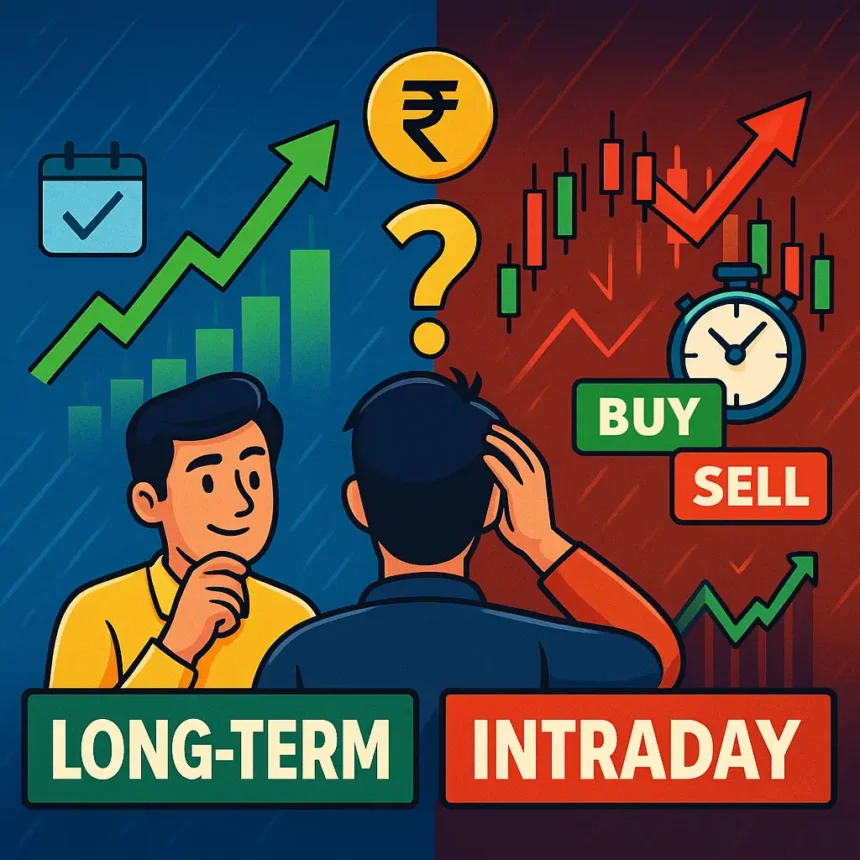
Long-Term vs Intraday: Which Trading Style is Better for You? Complete Guide for Indian Traders
Stock market participation in India has exploded over the last five years. With over 15 crore demat accounts, retail traders are entering markets faster than ever before. Many beginners face a common question:
Should I choose long-term investing or intraday trading to grow my money?

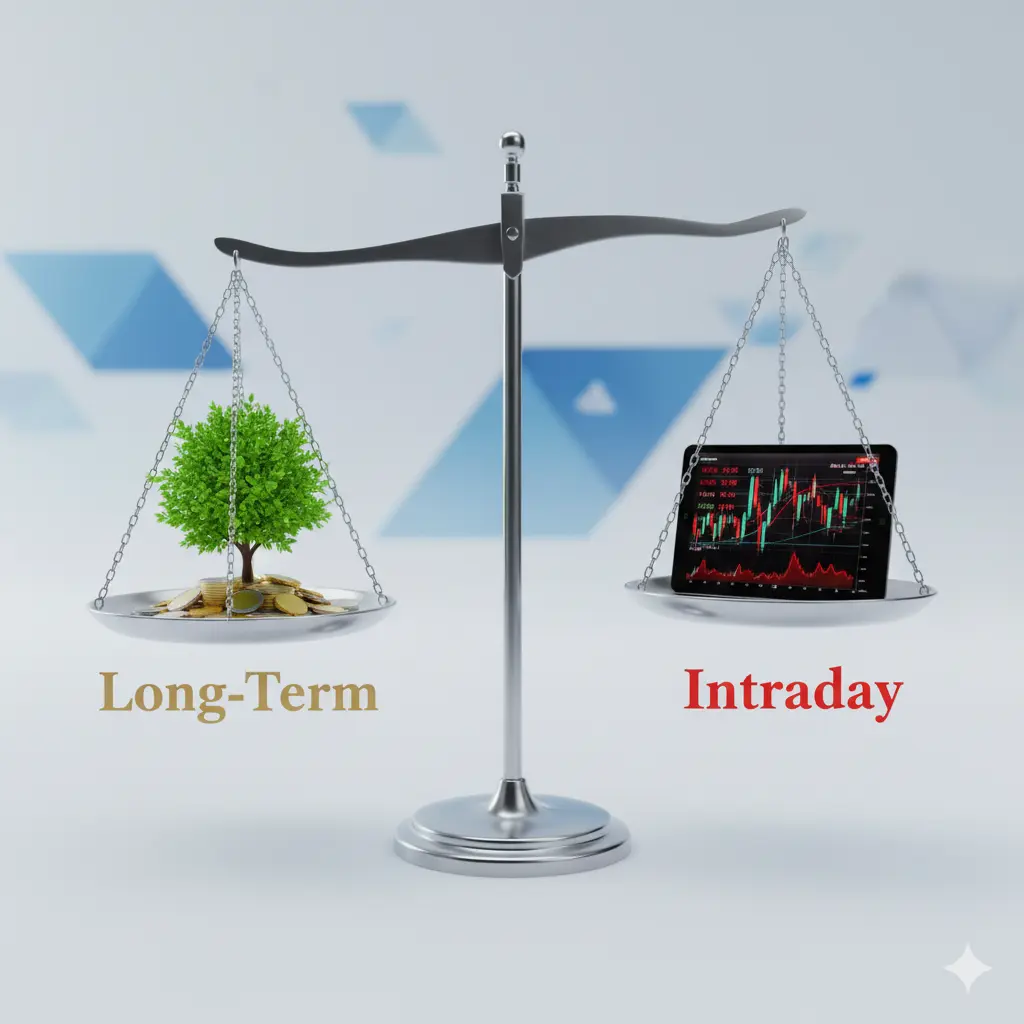
Which is better, safer, and more profitable in real life?
There is no single correct answer. Both trading styles have advantages and disadvantages. The right choice depends on:
- Risk profile
- Capital
- Time availability
- Knowledge level
- Personality & emotional control
This article breaks down the difference between long-term investing and intraday trading, comparing returns, risk, strategies, psychology and practicality for Indian markets.
What is Long-Term Investing?
Long-term investing means holding stocks for several years-typically 3 years or more, sometimes even decades. Long-term investors trust:
- Business fundamentals
- Corporate growth
- Economic expansion
- Compounding returns
Legendary investors like Warren Buffett, Rakesh Jhunjhunwala, Vijay Kedia, and Raamdeo Agrawal built wealth through long-term investments, not intraday trades.
Why People Choose Long-Term Investing
- Low stress
- Compounding benefit
- Suitable for beginners
- Less risky vs intraday
- Works without constant chart monitoring
What is Intraday Trading?
Intraday trading means buying and selling stocks within the same day before the market closes. Traders aim to make profits from short price movements.
Intraday usually requires:
- Real-time monitoring
- Chart reading skills
- Risk control discipline
- High mental focus
Many beginners attempt intraday trading because it looks exciting and promises quick profits, but SEBI reveals that 90% retail traders lose money in F&O trading due to lack of strategy and discipline.
Long-Term vs Intraday Trading: Key Differences
| Category | Long-Term Investing | Intraday Trading |
|---|---|---|
| Time Horizon | 3–10 years | Same Day |
| Risk Level | Low to Moderate | Very High |
| Return Method | Compounding growth | Small gains frequently |
| Required Skills | Basic fundamental analysis | Advanced technical analysis |
| Stress Level | Low | Very high |
| Suitable For | Beginners & working professionals | Experienced traders |
| Capital Needed | Flexible | Large margin required |
| Tax | 10% LTCG (after 1 year) | Higher taxation as business income |
| Emotional Discipline | Medium | Extreme control needed |
Potential Returns Comparison
Long-Term Investing
Historically, the Indian equity market has delivered 12-15% CAGR returns over time. Good stocks can become multibaggers, providing 100%-500% returns over years.
Example sectors that delivered high returns historically:
- IT
- Banking
- Pharma
- FMCG
- Automobile
- Infrastructure
Intraday Trading
Returns can be high, but extremely inconsistent. Skilled traders may earn 1%-2% daily in controlled setups, but beginners often face heavy losses.
Risk Factor Comparison
Long-Term Investing Risks
- Market crashes affect portfolio temporarily
- Wrong stock selection reduces gains
- Needs patience
Intraday Trading Risks
- Huge capital wipeout within minutes
- Slippage, volatility, sudden news impact
- Over-leveraging losses
“In intraday, risk is unlimited if discipline is missing.”
Psychological and Emotional Requirements
Long-Term
- Patience
- Long-term vision
- Staying calm during dips
Intraday
- Emotional stability
- Quick decision making
- Fear and greed control
- Ability to accept losses fast
Intraday is 80% psychology, 20% strategy.
Time & Lifestyle Comparison
| Aspect | Long-Term | Intraday |
|---|---|---|
| Time Required | Minimal | Full-time attention |
| Suitable For | Job holders, students, business owners | Full-time traders |
| Monitoring | Low | Continuous |
Intraday is like a job with pressure – long-term is passive.
Which is Better for Beginners?
For new traders, experts strongly suggest beginning with:
👉 Long-term investing + learning market basics
Before trying intraday.
Beginners should spend at least 6–12 months learning:
- Support & resistance
- Chart patterns
- Candlestick psychology
- Risk management
- Journaling
Common Mistakes in Both Styles
Long-Term
* Blindly following tips
* FOMO buying at peaks
* Not reviewing portfolio
Intraday
* No stop-loss
* Over-trading
* Leverage addiction
* Revenge trading
Taxation Difference in India
| Type | Holding Period | Tax |
|---|---|---|
| Long-term | >1 year | 10% LTCG above ₹1 lakh |
| Short-term | <1 year | 15% STCG |
| Intraday | Same day | Treated as business income |
Long-term is more tax-efficient.
What SEBI Advises Retail Traders
SEBI consistently advises:
- Avoid tips-based trading
- Manage risk
- Do not enter F&O blindly
- Understand product before investing
- Choose registered advisors only
So Which Trading Style is Better?
If Your Goal is Wealth Creation
Long-Term Investing wins
If Your Goal is Daily Income
⚠ Intraday trading is possible but requires:
- High skill
- Risk capital
- Years of practice
For 90% of individuals
Long-Term Investing is safer and more rewarding
Final Conclusion
Whether long-term or intraday, the market rewards knowledge, discipline, and patience.
Intraday is like high-speed racing – thrilling but dangerous.
Long-term is like gardening – slow but rewarding.
The best strategy is not the fastest, but the one you can sustain for life.
Start long-term.
Learn trading slowly.
Protect capital.
Focus on growth, not gambling.
Reviewed for accuracy and last updated on December 6, 2025.